Antarctica Cruise Cabins Guide: How to Choose the Right Cabin
Choosing the right cabin is one of the most important booking decisions you will make when planning an Antarctica expedition cruise. While the experience is focused on landings, wildlife encounters, and Zodiac excursions, your cabin still plays a significant role in comfort during the journey, particularly given Antarctica’s remote location.
These voyages take you into some of the most remote areas of the polar regions, where expedition ships navigate icy waters to reach wildlife colonies and historic landing sites along the Antarctic Peninsula.
Most expeditions depart from Ushuaia at the end of the world, sailing first through the Beagle Channel, often after travelers arrive via international flights to Buenos Aires before continuing south toward Tierra del Fuego.
Unlike traditional ocean cruises, an Antarctic cruise takes place on specialized expedition ships focused on exploration. While you will spend much of your time on deck observing wildlife or going ashore with guides, your cabin still affects comfort during sailing days and the Drake Passage crossing.
Cabin types on expedition ships vary widely depending on the cruise line and vessel size. Some ships offer simple oceanview cabins designed for practicality, while others feature luxury suites with private balconies, separate living areas, and premium services. Cabin choice also plays a role in the overall Antarctica trip cost, since upgrades from oceanview rooms to balcony cabins or suites can significantly increase the cruise fare.
In this guide, you will learn:
- The different Antarctica cruise cabin types
- Whether balcony cabins are worth the upgrade
- Which cabin locations minimize motion
- How cabin choices affect cruise price
- How to choose the best cabin based on your travel priorities
If you are still in the early planning stage, start with the main Antarctica Cruises Planning Guide, which covers routes, timing, ships, and pricing across the expedition cruise market.
Why Cabin Choice Matters on an Antarctica Cruise
At first glance, cabin selection might seem less important on an expedition cruise compared with traditional cruise vacations. After all, the focus is on wildlife encounters, Zodiac landings, and exploration rather than onboard amenities.
However, cabin choice can significantly influence your experience in several ways.
Expedition Cruise Ships Are Different From Traditional Cruise Ships
Most Antarctica voyages operate on expedition ships carrying between 100 and 200 passengers. These vessels are specifically designed for polar exploration and are significantly smaller than mainstream cruise ships.
The size of the vessel can significantly impact your experience, especially when comparing small ship vs large ship Antarctica cruises, where passenger capacity directly affects landings and onboard space.
Because of this, cabin layouts tend to be simpler and more functional. You will find fewer entertainment facilities and fewer cabin categories compared with large ocean liners.
Instead, expedition ships prioritize:
- Observation lounges
- Outdoor viewing decks
- Zodiac embarkation platforms
- Lecture theaters
- Expedition gear storage
Cabins are designed primarily for comfort and rest between excursions, not as private entertainment spaces.
If you are comparing vessel sizes, see the guide on Small Ship vs Large Ship Antarctica Cruises, which explains how passenger capacity affects the expedition experience.
How Much Time You Actually Spend in Your Cabin
On most Antarctica itineraries, the daily schedule is built around shore landings and wildlife viewing opportunities. When conditions allow, ships typically organize two off-ship excursions per day.
This means your time onboard is usually spent:
- On open observation decks
- In the panoramic lounge
- Attending expert lectures
- Watching wildlife from the bridge area
Even so, having a comfortable cabin becomes more important during long sailing days, particularly when crossing the Drake Passage.
Cabin Choice and the Drake Passage

Nearly all Antarctic Peninsula cruises departing from South America must cross the Drake Passage, one of the most famous stretches of ocean in the world. Conditions can range from calm seas to the notorious “Drake Shake.”
Cabin location can influence how much motion you feel during this crossing. Midship cabins on lower decks generally experience less movement compared with cabins located high on the ship or near the bow.
Travelers who are concerned about seasickness often prefer midship cabins on lower decks, where the ship’s motion tends to be more stable.
If you want to understand the crossing itself, see whether you should sail or skip the Drake Passage, which explains the different travel options.
Antarctica Cruise Cabin Types Explained
Most ships operating in Antarctica expedition cruising offer four main cabin categories. While specific layouts vary by cruise line, the general structure is consistent across most Antarctica vessels.
Understanding the differences helps you decide whether an upgrade is worthwhile.
| Cabin Type | Key Features | Typical Price Level |
|---|---|---|
| Interior Cabin | No windows, basic layout | Lowest |
| Oceanview Cabin | Window or porthole | Moderate |
| Balcony Cabin | Private balcony with seating | Higher |
| Suite | Large space with premium amenities | Highest |
Interior Cabins
Interior cabins are the most affordable accommodation option on ships that offer them. These cabins do not include windows and rely entirely on artificial lighting. Interior cabins are more common on older ships in the Antarctic fleet, while many newer expedition vessels focus primarily on oceanview and balcony accommodations.
They are relatively rare on Antarctica expedition ships, because most polar vessels prioritize oceanview accommodations. However, a few ships — especially larger expedition vessels — still include interior cabins as budget options.
Advantages:
- Lowest cruise fare
- Comfortable sleeping environment
- Often located on lower decks with reduced motion
Disadvantages:
- No natural light
- No views of the surrounding scenery
For travelers prioritizing budget over cabin amenities, interior cabins can still provide a perfectly comfortable base during the expedition.
Oceanview Cabins
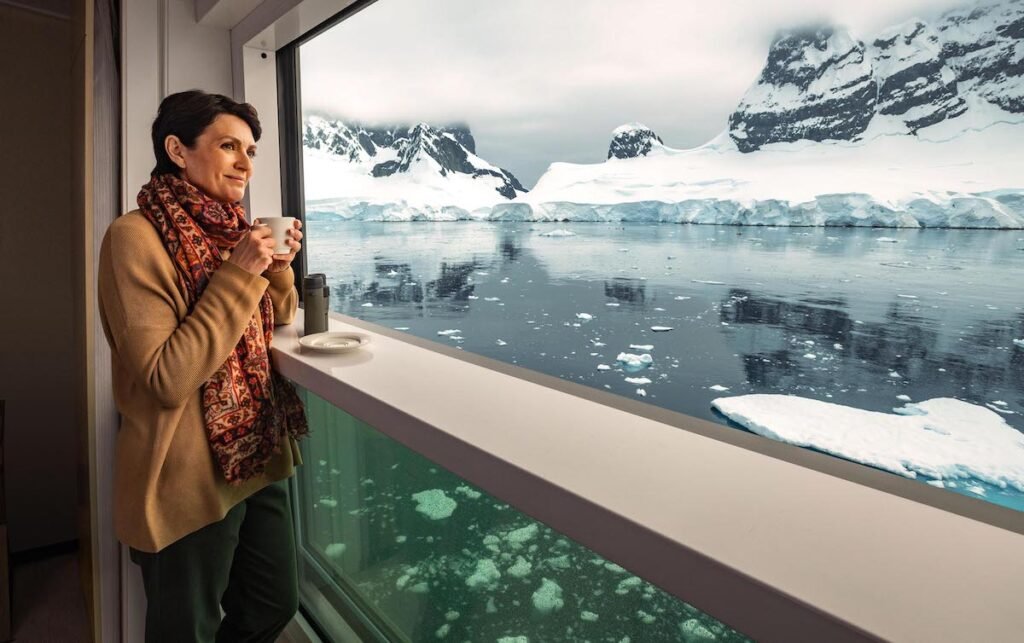
Oceanview cabins are the most common cabin category on Antarctica expedition ships. These rooms feature large windows or traditional portholes, allowing passengers to enjoy views of Antarctica’s icy landscapes.
Oceanview cabins allow you to see the Antarctic scenery directly from your room, which can be especially appealing when the ship sails through iceberg-filled channels or wildlife-rich waters. From these cabins you may occasionally see colonies of penguins, elephant seals, or seabirds in their natural habitat as the ship sails along the western coast of the Antarctic Peninsula.
Typical features include:
- Window or porthole
- Comfortable twin or queen beds
- Desk and seating area
- Private bathroom
Oceanview cabins represent a good balance between price and experience, making them one of the most popular options among expedition travelers.
Balcony Cabins
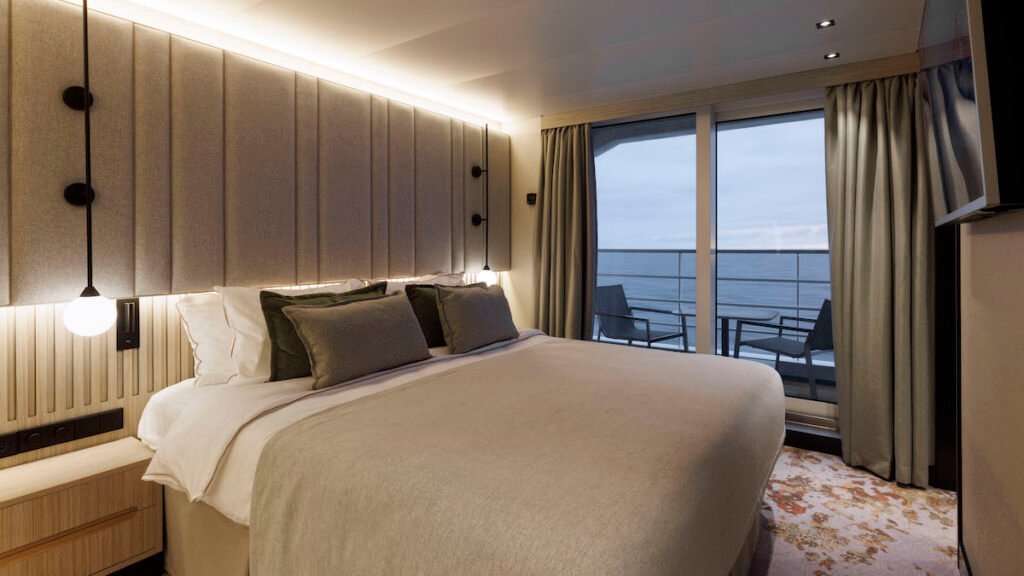
Balcony cabins include a private outdoor balcony attached to the room. These spaces typically include seating that allows passengers to step outside and enjoy views of icebergs and the Antarctic coastline.
Balcony cabins are increasingly common on newer expedition ships, especially vessels built after 2018.
Balcony cabins are especially common on luxury Antarctica cruises, where ships are designed with more private outdoor space.
Advantages include:
- Private wildlife viewing
- Outdoor photography opportunities
- Fresh air access without leaving your cabin
We explore whether the upgrade is worthwhile in more detail below.
Suites and Premium Cabins
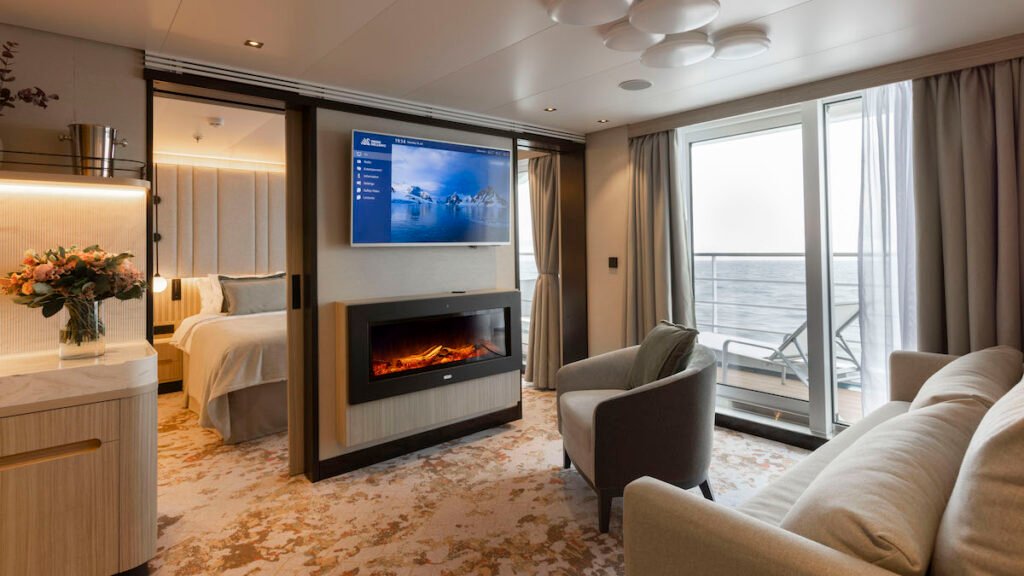
Suites represent the highest cabin category available on Antarctica expedition ships. These accommodations typically offer significantly more space and additional luxury amenities.
Suite features often include:
- Separate living areas
- Larger bathrooms
- Private balconies
- Butler or concierge services
- Priority embarkation or dining perks
For travelers seeking maximum comfort, suites can transform the voyage into a high-end polar travel experience.
Balcony Cabins on Antarctica Cruises: Are They Worth It?
Balcony cabins are one of the most common upgrades travelers consider when booking an Antarctica cruise. While private balconies are highly valued on tropical cruises, their usefulness in polar environments can be different.
Whether a balcony is worth the extra cost depends largely on how you plan to experience the voyage.
Wildlife Viewing Opportunities
One advantage of balcony cabins is the ability to observe wildlife directly from your room. Antarctica’s waters are home to unique wildlife, including humpback whales, seals, and seabirds, and balcony cabins occasionally allow passengers to observe whales or seabirds passing close to the ship.
During certain moments — especially when whales appear close to the ship — stepping onto your private balcony can provide a memorable viewing opportunity.
However, many wildlife sightings happen quickly, and passengers often gather in the ship’s public spaces, such as open observation decks where views are wider and less obstructed.
Photography Advantages
For photographers, balcony cabins can offer a convenient location to capture spontaneous moments without needing to rush to public decks.
You may be able to photograph:
- Icebergs passing close to the ship
- Sea ice landscapes
- Early morning Antarctic light
That said, the best photography angles are usually found on the upper observation decks, where there are no railings or structural obstructions.
Weather Limitations
Antarctica is one of the coldest and windiest environments on Earth. Even during peak cruise season, temperatures often range between 20°F and 40°F (-6°C to 4°C).
Conditions vary significantly depending on the best time to visit Antarctica, which affects temperatures, wildlife activity, and sea conditions.
Wind chill can make balconies uncomfortable during long periods, particularly when the ship is moving at cruising speed.
Because of this, many travelers find they use their balcony less frequently than expected.
Cost Considerations
Balcony cabins typically cost 20–40% more than comparable oceanview cabins, depending on the ship and itinerary.
For some travelers, the additional privacy and convenience justify the upgrade. For others, that money may be better spent on excursions, flights, or extending the trip.
Suite vs Standard Cabins on Expedition Ships
Suites represent the highest cabin category on most Antarctica expedition ships, offering spacious suites with additional services and premium amenities compared with standard cabins. While not necessary for enjoying the expedition itself, suites can significantly enhance comfort during longer voyages.
Understanding the differences helps you decide whether the upgrade aligns with your travel priorities and budget.
What Defines a Suite on an Expedition Ship
Suites vary widely depending on the cruise line and vessel. On luxury expedition ships, suite guests may also enjoy upgraded experiences such as private lounge access or priority reservations in the ship’s fine dining venues.
Typical suite features may include:
- Larger cabin square footage
- Separate seating or living areas
- Larger private balconies
- Walk-in closets
- Premium bathroom amenities
- Priority embarkation or dining
Some luxury operators also include services such as butler assistance, dedicated concierge support, or complimentary laundry.
Standard Cabins: The Most Common Choice
Standard cabins — typically oceanview or balcony cabins — make up the majority of accommodations on Antarctica expedition ships.
They are designed to be comfortable and practical rather than luxurious. A standard cabin usually includes:
- Twin or queen beds
- Desk and seating area
- Compact private bathroom
- Storage space for expedition gear
For most travelers, these cabins provide everything needed for a comfortable expedition experience.
Because the focus of the trip is exploration rather than onboard luxury, many travelers prefer to allocate their budget toward the itinerary itself rather than a larger cabin.
Are Suites Worth the Upgrade?
Suites are best suited for travelers who prioritize additional space, privacy, and premium service.
They may be particularly appealing if you:
- Prefer extra room to relax between excursions
- Are celebrating a special occasion
- Plan to spend more time inside the cabin
- Value premium amenities and service
However, for travelers focused primarily on wildlife encounters and landings, standard cabins often provide excellent value.
Best Cabin Location on an Antarctica Cruise Ship

Beyond cabin type, location on the ship can also influence comfort during your Antarctica voyage. Each expedition vessel travels through open ocean conditions and narrow Antarctic channels, and some cabin locations experience more motion than others.
Cabin location can be particularly important for travelers prone to motion sickness, especially when crossing the Drake Passage.
Choosing the right deck and position can make a noticeable difference, especially during the Drake Passage crossing.
Midship Cabins for Stability
Cabins located near the middle of the ship (midship) tend to experience the least motion. This is because the center of the vessel moves less dramatically compared with the bow or stern.
For travelers concerned about seasickness, midship cabins are usually the most stable option.
These cabins are particularly beneficial during:
- Drake Passage crossings
- Rough weather conditions
- Longer sailing days
Many experienced polar travelers deliberately book midship cabins for this reason.
Lower Deck vs Upper Deck Cabins
Deck height can also influence how much motion you feel onboard.
Lower deck cabins generally provide:
- Greater stability
- Less vertical movement
- Slightly quieter conditions
Higher deck cabins, on the other hand, may offer:
- Better views
- Easier access to observation decks
- More natural light
Travelers prone to seasickness often choose lower deck cabins near midship, while those prioritizing views may prefer higher decks.
Forward vs Aft Cabins
Cabins located near the bow (front of the ship) typically experience more vertical movement when sailing through waves.
Aft cabins (toward the back) may feel slightly more vibration depending on the ship’s engine configuration.
Neither location is inherently problematic, but travelers sensitive to motion often prefer to avoid the extreme ends of the vessel.
Cabins for Travelers Concerned About Seasickness
If motion sensitivity is a concern, the safest approach is to choose:
- Midship location
- Lower or middle deck
- Cabins close to the centerline of the vessel
Modern expedition ships are also equipped with stabilizers, which significantly reduce rolling in rough seas.
Cabins on Small Expedition Ships vs Large Cruise Ships
The size of the ship and overall ship design can influence the cabin experience as well.
Antarctica cruise vessels generally fall into two broad categories:
- Small expedition ships (typically 100–200 passengers)
- Larger expedition ships (200–500 passengers)
Each category offers different cabin layouts and onboard environments.
Cabins on Small Expedition Ships
Smaller ships often feature simpler cabin designs, focusing on functionality rather than luxury.
Many early Antarctic expeditions relied on research vessels, and today’s small expedition ships still retain some of that practical design philosophy.
Advantages include:
- More intimate onboard atmosphere
- Easier access to decks and expedition areas
- Faster Zodiac operations for shore landings
Cabins on Larger Expedition Ships
Larger ships with modern expedition designs often feature more advanced cabin layouts.
These ships may include:
- Larger balcony cabins
- Multiple suite categories
- Modern interior layouts
- Floor-to-ceiling windows
They also tend to offer additional onboard facilities such as spas, larger lounges, and expanded dining options.
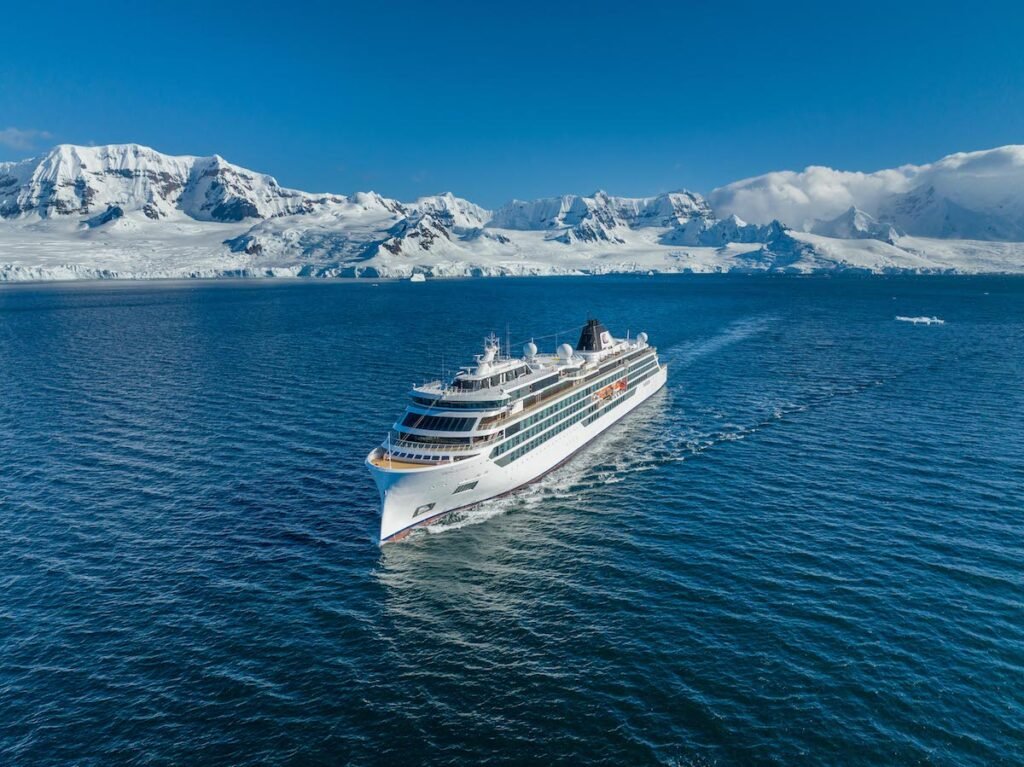
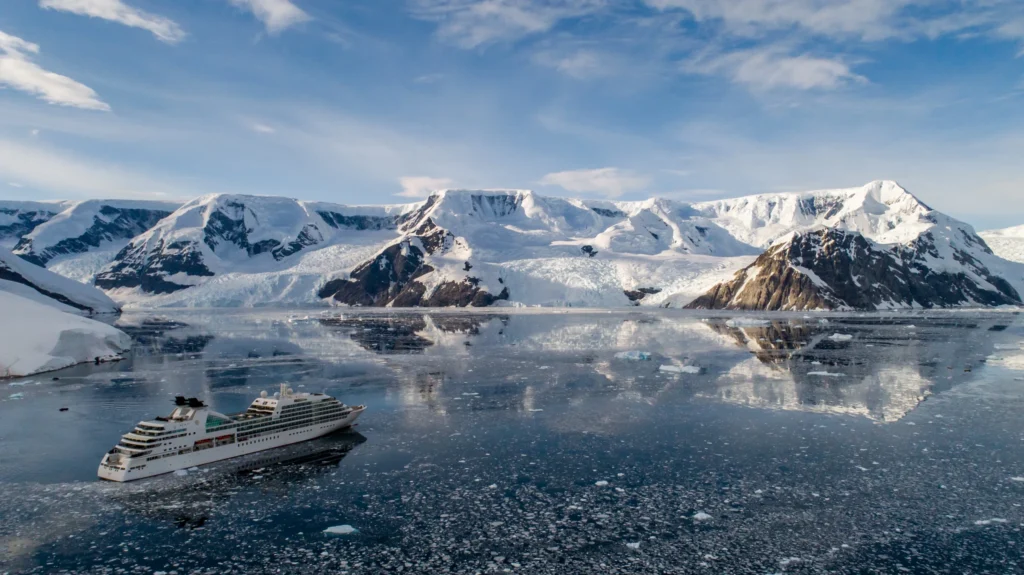
Modern expedition ships such as Scenic Eclipse, Silver Endeavour, National Geographic Endurance, National Geographic Explorer, and Magellan Explorer represent the newest generation of polar expedition ships with advanced technology and innovative design.
To see how these vessels differ in design and onboard experience, read this comparison of Antarctica cruise ships.
How Cabin Choice Affects Antarctica Cruise Price
Cabin selection is one of the primary factors influencing the overall cost of an Antarctica cruise. Prices can vary significantly depending on cabin category, ship size, and the cruise operators running the expedition.
| Cabin Type | Typical Price Range | Relative Cost |
|---|---|---|
| Interior | Lowest available fare | Budget option |
| Oceanview | Moderate upgrade | Mid-range |
| Balcony | Significant upgrade | Premium |
| Suite | Highest category | Luxury |
Upgrading from an oceanview cabin to a balcony cabin may increase the price by 20–40%, while suites can cost substantially more depending on the ship.
All passengers participate in the same landings, Zodiac excursions, and expert-led lectures.
Your cabin choice primarily affects onboard comfort rather than the core expedition activities. While balcony cabins and suites provide additional comfort, travelers should weigh whether the upgrade justifies the additional cost.
If you are evaluating overall trip costs, see this Antarctica cruises cost guide, which breaks down pricing across expedition operators.
How to Choose the Right Antarctica Cruise Cabin
The best cabin ultimately depends on your travel priorities, budget, and comfort preferences. The following framework can help simplify the decision.
Choose Based on Budget
If budget is your main consideration, oceanview cabins usually provide the best balance between price and comfort.
Interior cabins may offer the lowest fares, but they are less common on expedition ships.
Some expedition ships also offer single cabins designed for solo travellers, reducing the need for expensive single supplements.
Travelers seeking a premium experience may consider balcony cabins or suites, though the upgrade is not essential for enjoying the expedition.
Choose Based on Motion Sensitivity
Travelers concerned about seasickness should prioritize cabin location.
The most stable cabins are generally:
- Midship
- Lower or middle decks
- Away from the bow and stern
This positioning reduces the amount of movement felt during rougher sea conditions.
Choose Based on Space and Comfort
Suites offer the most interior space, making them appealing for longer expeditions or travelers who prefer extra room to relax.
Standard cabins, however, are typically comfortable enough for most travelers given the amount of time spent outside the room.
Choose Based on Wildlife Viewing
If wildlife viewing and scenery are a major priority, balcony cabins can offer convenient private viewing opportunities.
However, most wildlife sightings occur on open observation decks, where views are unobstructed and more expansive.
Summary: Best Antarctica Cruise Cabin Choices
The right cabin depends on your personal travel style and priorities.
| Traveler Type | Recommended Cabin |
|---|---|
| Budget travelers | Interior or oceanview cabin |
| Value-focused travelers | Oceanview cabin |
| Wildlife photographers | Balcony cabin |
| Motion-sensitive travelers | Midship cabin on lower deck |
| Luxury travelers | Suite or premium balcony cabin |
In most cases, ocean view cabins offer the best balance between cost, comfort, and access to Antarctic scenery during this extraordinary Antarctic experience.