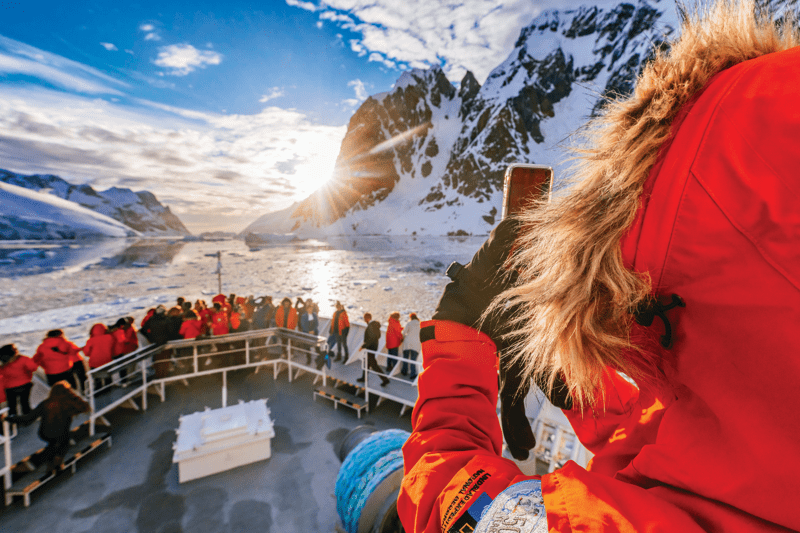
Antarctica Cruise Ships Compared (2026–2028 Complete Guide)
Antarctica cruise ships are not traditional cruise vessels. They are capacity-limited expedition ships operating under strict IAATO landing regulations, ice-class standards, and passenger thresholds that directly affect your experience.
Choosing the right ship is not about brand alone. It is about:
- Passenger capacity
- Landing rotation efficiency
- Ice classification
- Expedition staffing ratios
- Cost structure
This guide explains how Antarctica cruise ships differ by size, capability, and operational model for the 2026–2028 seasons.
If you are in the early research phase, start with the complete Antarctica Cruises Planning Guide for a full overview of routes, timing, and cost considerations.
Every landing is governed by International Association of Antarctica Tour Operators (IAATO) protocols that limit how many passengers may go ashore at one time.
Because of this, ship size directly affects your daily landing time, group rotation schedule, and overall expedition rhythm. Two ships visiting the same site on the same day can deliver noticeably different experiences based solely on passenger capacity.
By the end of this guide, you will understand exactly how ship size, ice class, and operational structure influence your Antarctica cruise — and which category aligns with your priorities for the 2026–2028 seasons.
Antarctica Cruise Ships by Size (2026–2028 Overview)

Antarctica cruise ships fall into three functional categories based on passenger capacity.
If you want a detailed breakdown of passenger counts across specific vessels, read How Many Passengers Are on Antarctica Cruises.
| Ship Size Category | Passenger Capacity | IAATO Landing Access | Landing Efficiency | Typical Price Range (USD) | Best For |
|---|---|---|---|---|---|
| Small | Under 100 | All passengers ashore at once | High | $9,000–$16,000+ | Maximum landing time |
| Mid-Size | 100–200 | Rotational landings | Moderate | $7,000–$14,000 | Balance of cost & experience |
| Large Expedition | 200–250 | Rotational landings | Lower | $6,000–$12,000 | More onboard amenities |
Under IAATO rules, no more than 100 passengers may be ashore at one time. That single regulation shapes the entire ship size debate.
Operational Impact by Ship Size
| Operational Factor | Under 100 Guests | 100–200 Guests | 200–250 Guests |
|---|---|---|---|
| Zodiac Groups Per Landing | 1 | 2 | 2–3 |
| Avg. Shore Time Per Rotation | 90–120 minutes | 60–90 minutes | 45–75 minutes |
| Typical Expedition Staff | 8–12 | 10–14 | 12–16 |
| Rotation Wait Time | Minimal | Moderate | Extended |
| Cabin Category Range | Limited | Moderate | Extensive |
While all ships comply with IAATO’s 100-passenger shore limit, the number of onboard guests determines how efficiently those rotations are managed.
How Antarctica Cruise Ships Differ from Traditional Cruise Ships
Unlike mainstream cruise ships, Antarctica expedition vessels are engineered around landing logistics. Dedicated mudrooms allow biosecurity checks before every landing. Built-in zodiac platforms streamline boarding procedures. Expedition teams typically maintain a staff-to-guest ratio ranging from 1:8 to 1:12, significantly higher than conventional cruise operations.
These vessels prioritize operational workflow over entertainment infrastructure. Public space is designed for wildlife observation, lectures, and expedition briefings — not retail, gaming, or large-scale stage productions.
- No mega-ships operate Antarctic landings
- Daily zodiac deployments are core operations
- Expedition teams often include glaciologists, marine biologists, and polar historians
- Bridge access and open-deck wildlife viewing are common
- Flexible routing based on weather and ice
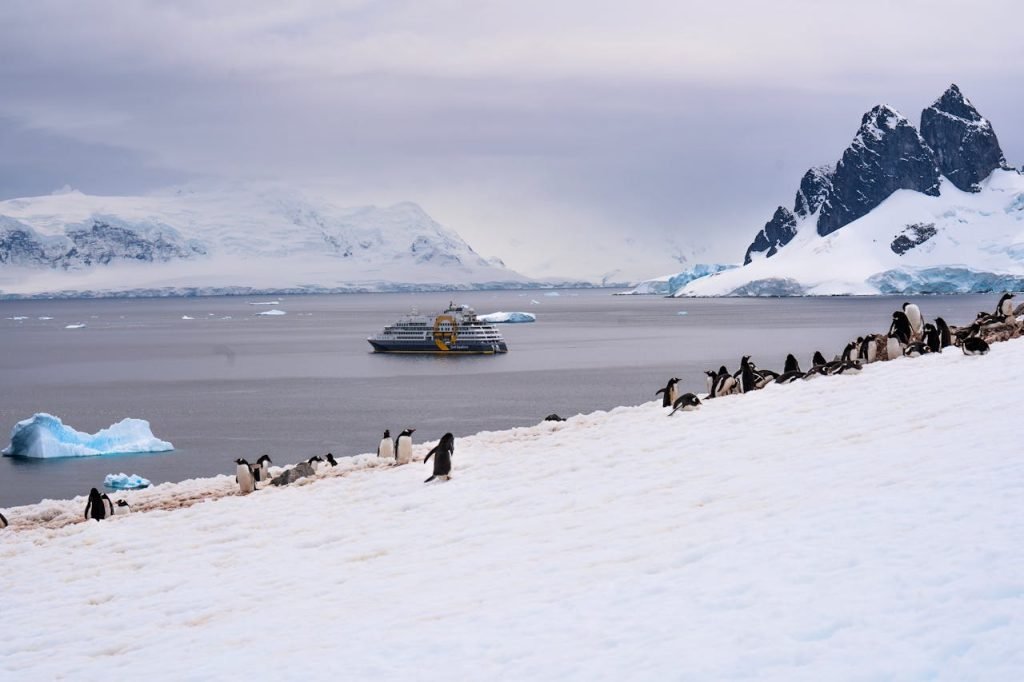
Operators such as HX and Quark Expeditions design ships around expedition utility rather than entertainment infrastructure.
There are no casinos, Broadway theatres, or large-scale retail decks. Space is allocated to mudrooms, zodiac platforms, lecture rooms, and observation lounges.
For a technical comparison between expedition vessels and conventional cruise ships, see Expedition Ship vs Traditional Cruise Ship in Antarctica.
IAATO Landing Limits and Why Size Matters
The International Association of Antarctica Tour Operators (IAATO) governs shore landings. IAATO regulations apply to all member operators and are strictly enforced through site allocation systems, landing coordination, and environmental monitoring.
Ships carrying more than 500 passengers are not permitted to conduct landings in Antarctica. As a result, true mega-cruise ships do not operate expedition-style itineraries on the Antarctic Peninsula.
Key rules include:
- Maximum 100 passengers ashore at one time
- 1:20 guide-to-guest ratio during landings
- Strict wildlife distancing
- Controlled site rotation
This means passenger capacity directly impacts how long you spend ashore. Each approved landing site operates under visitor quotas and time allocations. As a result, passenger capacity directly determines how efficiently shore access is managed.
Under 100 Guests
These are true small-ship expedition vessels.
Examples include ships operated by Oceanwide Expeditions and smaller vessels from Aurora Expeditions.
Operational advantages:
- All guests land simultaneously
- No rotation delays
- Greater flexibility in remote sites
- Faster zodiac deployment
Trade-off:
- Higher per-passenger cost
- Fewer onboard amenities
Travelers prioritizing larger suite categories, multiple dining venues, or expanded wellness facilities may find under-100 ships operationally excellent but spatially limited.
100–200 Guests
This is the most common expedition size.
Operational characteristics:
- Landings occur in two rotating groups
- 60–90 minutes ashore per rotation
- Moderate onboard space
- Balanced staffing ratios
Travelers who place maximum uninterrupted shore time above all else may prefer smaller vessels, even if that means sacrificing some onboard space.
For cost implications by capacity, refer to the Antarctica Cruises Cost Guide (2026–2028).
200–250 Guests
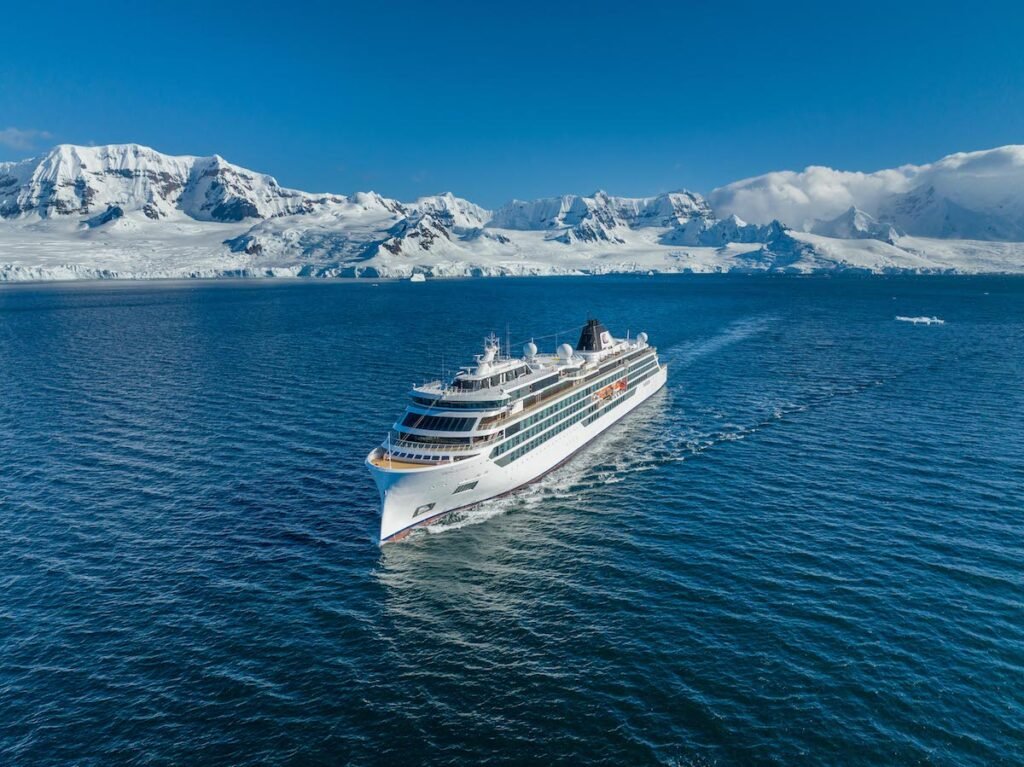
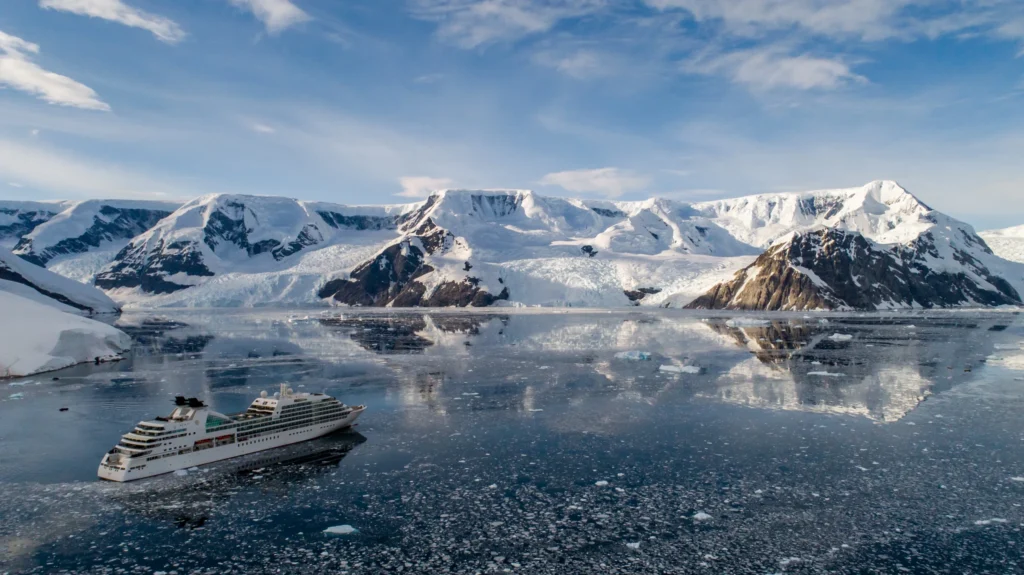
These are large expedition ships, often luxury-oriented.
Examples include vessels from:
- HX Expeditions
- Silversea Cruises
- Seabourn
Operational realities:
- Multiple landing rotations
- Increased onboard programming
- Larger suites and higher crew ratios
While comfort increases, landing time per guest decreases due to IAATO rotation limits. Travelers seeking highly immersive expedition intensity may find extended landing rotations reduce time ashore, despite the increase in onboard comfort.
Because these ships often include additional onboard amenities and service layers in the base fare, understanding exactly what is bundled into the cruise price is essential when comparing value — see What’s Included in an Antarctica Cruise?
Small Ship vs Large Ship Antarctica Cruises

Landing Efficiency
Ships under 100 guests can land all passengers simultaneously. A 150-guest vessel typically operates in two rotating groups, while ships carrying over 200 guests may require two to three operational waves per landing. As passenger count increases, rotation time extends and overall shore access becomes more segmented.
For a full operational breakdown focused specifically on size trade-offs, see our Small Ship vs Large Ship Antarctica Cruises guide.
Onboard Space & Comfort
Larger ships offer:
- Larger suite categories
- Stabilizer systems — explained in detail in our Do Antarctica Cruise Ships Have Stabilizers? guide
- Multiple dining venues
- Expanded observation decks
Smaller ships prioritize expedition workflow over leisure amenities.
Price Implications
Smaller ships:
- Higher cost per berth
- Lower fuel efficiency per passenger
- Higher staff-to-guest ratios
Larger ships:
- Economies of scale
- Lower entry pricing
- More promotional discounting
Ice Class & Polar Capabilities
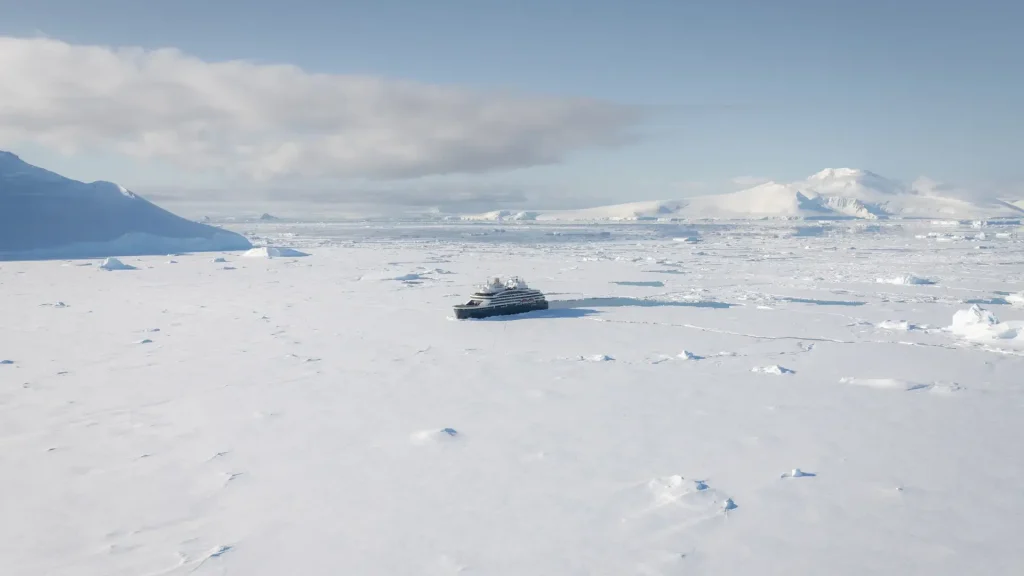
What Ice-Class Ratings Mean
Common classifications:
- PC5 / PC6 (Polar Class)
- 1A Super (Baltic Ice Class)
Higher ice class allows operation in heavier ice conditions but does not dramatically change most Peninsula itineraries.
Does Higher Ice Class Matter?
Higher ice-class ratings are most relevant for:
- Early-season sailings
- Weddell Sea itineraries
- Deep pack-ice exploration
For standard Antarctic Peninsula itineraries, higher ice-class ratings rarely translate into noticeably different routing. Weather conditions, wind, and swell patterns impact daily operations more frequently than pack ice. While advanced ice classification enhances structural capability and safety margins, it does not override IAATO landing limits or dramatically increase shore access for most itineraries.
Expedition-Focused vs Luxury Expedition Ships
Antarctica expedition ships generally fall into two structural models: expedition-first vessels and luxury expedition vessels. Both comply with IAATO regulations and conduct landings under the same environmental framework, but the onboard philosophy and cost structure differ significantly.
The distinction determines whether your budget prioritizes landing intensity or onboard refinement.
Core Expedition Operators
Companies such as HX, Quark Expeditions, and Oceanwide Expeditions operate ships built around expedition logistics.
Key characteristics include:
- High expedition staff-to-guest ratios
- Science-led lectures and field briefings
- Emphasis on zodiac cruising and extended landings
- Functional cabin design prioritizing practicality over luxury
- Streamlined public spaces focused on observation and learning
On expedition-focused ships, daily programming revolves around wildlife sightings, ice conditions, and landing opportunities. Evening briefings prepare guests for the next day’s operations. The expedition leader and bridge team maintain flexibility to adjust routes based on weather and wildlife activity.
Cabins are typically comfortable but not oversized. Dining is expedition-casual rather than fine dining. The operational priority is time ashore and educational depth.
This model appeals to travelers who prioritize immersion, wildlife access, and expedition authenticity over suite size or premium service layers.
Luxury Expedition Operators
Companies such as Silversea Cruises and Seabourn operate larger expedition vessels that combine polar capability with high-end hospitality infrastructure.
Key characteristics include:
- All-suite or predominantly suite-based accommodations
- Butler service on many cabin categories
- Multi-course dining with premium beverage programs
- Spa facilities and expanded wellness areas
- Additional amenities such as submersibles or helicopters (ship-dependent)
Luxury expedition ships still deploy zodiacs and maintain professional expedition teams. However, onboard space allocation shifts toward hospitality features. Public lounges are larger, suites include balcony configurations on some vessels, and service ratios reflect traditional luxury cruise standards.
If cabin category and suite layout are key decision factors, review our Antarctica Cruise Cabins Guide for a detailed comparison of balcony, suite, and standard options.
Because many luxury expedition ships fall into the 200–250 passenger category, landing rotations are often more structured. Shore time remains meaningful but may be segmented into additional operational waves compared to under-100 vessels.
This model appeals to travelers who value Antarctic access but do not wish to compromise on accommodation size, culinary standards, or premium onboard services.
Expedition vs Luxury Expedition Comparison
| Feature | Expedition-Focused Ships | Luxury Expedition Ships |
|---|---|---|
| Suite Size | Smaller, functional | Larger, premium finishes |
| Crew Emphasis | Expedition staff-heavy | Hospitality-heavy |
| Dining Style | Casual expedition dining | Multi-course fine dining |
| Enrichment | Science-driven lectures | Mixed enrichment & lifestyle |
| Entry Pricing | Moderate–High | High–Premium |
Both models operate under the same IAATO landing framework. The difference lies not in eligibility to land, but in how onboard space, staffing, and pricing are allocated.
If your priority is maximizing shore immersion and expedition rhythm, expedition-focused vessels often deliver greater operational intensity. If your priority is combining Antarctic access with refined accommodations and hospitality, luxury expedition ships provide that balance.
The decision ultimately aligns with how you weight landing efficiency versus onboard comfort within your overall Antarctica cruise budget.
To compare specific itineraries across ship categories, review our Best Antarctica Cruises analysis.
Ship Size and Cost Structure
Ship pricing in Antarctica is influenced by fixed operating costs that remain high regardless of passenger count. Fuel consumption, polar-certified crew salaries, ice-class engineering, and expedition staffing keep operating costs consistently high.
Smaller ships distribute those costs across fewer passengers, increasing per-guest pricing. Larger vessels benefit from economies of scale, lowering entry fares while maintaining compliance with IAATO regulations.
Unlike Caribbean or Mediterranean cruises, Antarctica itineraries operate within a short season (November through March) with no repositioning discounts or last-minute inventory surges. Most ships operate for only 12–16 weeks annually, compressing availability and limiting discount flexibility.
Peak season sailings (late December through January) experience the strongest demand and highest pricing. Shoulder months such as November and March typically offer better value relative to landing quality.
For a detailed Antarctica cruise cost breakdown by cabin type, season, and ship category, see the Antarctica Cruise Cost Guide.
How to Choose the Right Antarctica Cruise Ship
Most travelers ultimately choose based on how they balance shore access, onboard comfort, and price.
- If maximum shore time is your top priority → Choose under 100 guests.
- If balancing cost and landing access matters most → Choose 100–200 guests.
- If suite size, dining variety, and onboard comfort are primary → Choose 200–250 guests.
- If you are highly sensitive to motion → Prioritize newer vessels with advanced stabilizer systems.
- If traveling in peak season → Book early, especially for under-100 ships with limited inventory.
For season timing and wildlife differences, see Best Time to Visit Antarctica.
Booking Strategy for Specific Ships
Antarctica cruise inventory is structurally limited. Most ships operate only during the austral summer, typically from November through March. This creates a compressed booking window with fewer total departures compared to year-round cruise markets.
- Book 12–18 months in advance for small ships
- Suite categories sell out first
- Shoulder season (November, March) offers better value
- Loyalty programs reduce repeat traveler costs
- Single supplements vary widely by operator
Under-100 passenger vessels often sell out 12–18 months in advance due to limited berth count.
We analyze booking timelines in detail in Do Antarctica Cruises Sell Out?
Premium suite categories across all ship sizes tend to fill first. Early booking not only secures preferred cabin types but also protects against peak-season pricing escalation.
Frequently Asked Questions
Strategic Summary
Antarctica cruise ships are differentiated primarily by passenger capacity, regulatory landing limits, and operational structure.
The most important variables are:
- Passenger capacity
- IAATO landing limits
- Ice class rating
- Cost structure
Understanding these operational differences allows you to select the right expedition model for 2026–2028.
For complete itinerary planning, cost evaluation, and ship selection strategy, revisit the Antarctica Cruises Planning Guide before making your final booking decision.