Best Time to Visit Antarctica (2026–2028 Complete Season Guide)
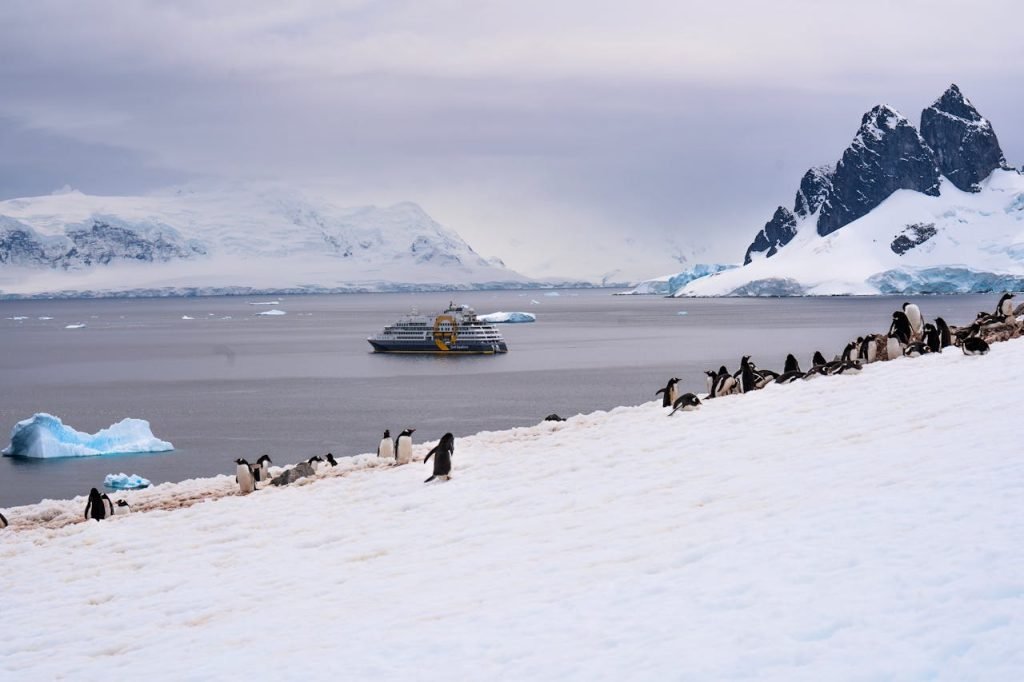
The best time to visit Antarctica depends entirely on your priorities: wildlife density, weather stability, photography conditions, or pricing.
The Antarctic cruise season runs from late October through March. Outside this window, sea ice closes access and expedition ships do not operate.
For most travelers, the best time to cruise Antarctica falls between December and February, when wildlife activity peaks and weather conditions are at their most stable. However, November and March offer strategic advantages for pricing, sea ice landscapes, and availability.
Understanding the seasonal structure is essential before booking a 2026–2028 departure.
Best Time to Visit Antarctica at a Glance
| Month | Wildlife Activity | Weather Stability | Price Level | Availability |
|---|---|---|---|---|
| October | Limited | Variable | Moderate | Limited departures |
| November | Penguin courtship | Improving | Moderate | Good |
| December | Nesting season | Stable | High | Strong demand |
| January | Penguin chicks | Most stable | Peak | Sells early |
| February | Peak whales | Stable | High | Moderate |
| March | Whale sightings | Cooler | Lower | Good |
There is no single “best” month. Each period serves a different objective.
Antarctica Cruise Season Overview (October–March)
Antarctica experiences six months of darkness and extreme winter conditions. Expedition travel is possible only during the austral summer.
Key characteristics of the cruise season:
- 24-hour daylight in peak summer
- Gradual sea ice retreat from November onward
- Wildlife breeding cycles aligned with summer warmth
- Warmer average temperatures compared to winter
Most sailings depart from Ushuaia or operate fly-cruise programs via Punta Arenas.
Seasonality influences not just wildlife, but also:
- Pricing
- Cabin availability
- Sea conditions
- Landing frequency
The best time to cruise Antarctica is therefore a strategic decision, not a fixed date.
Best Time to Cruise Antarctica by Month
Antarctica’s expedition season unfolds in distinct phases, each shaped by wildlife cycles, sea ice retreat, and demand concentration. While January is often considered peak season, earlier and later months offer different trade-offs in access, pricing, and photographic conditions.
The breakdown below explains what changes month by month.
October (Limited Departures)
October marks the earliest edge of the season. Only select expedition operators sail during late October.
Characteristics:
- Heavy sea ice presence
- Fewer ships operating
- Early penguin courtship behavior
Wildlife density is lower than peak summer months, but dramatic ice formations are at their most expansive.
Availability is higher due to lower demand.
Best for:
- Photographers seeking ice-dominant landscapes
- Travelers prioritizing early-season solitude
November (Early Season Value)
November is one of the most balanced months to visit Antarctica.
Expect:
- Expansive sea ice fields
- Active penguin courtship
- Cleaner snow-covered landscapes
- Increasing daylight
Temperatures begin to moderate, and landing conditions improve compared to October.
November departures often cost 10–20% less than January sailings, making this one of the strongest value windows for 2026–2028 itineraries.
Best for:
- Balanced wildlife and scenery
- Moderate pricing
- High photographic contrast
December (Holiday Peak)
December marks the transition into peak season.
Wildlife activity intensifies:
- Penguin nesting begins
- Seal populations become more visible
- Snow melt increases shoreline access
Weather stabilizes, and daylight is continuous.
However, Christmas and New Year departures command premium pricing. Cabin inventory, particularly balcony categories, sells out early.
Best for:
- Holiday travel
- Nesting wildlife observation
- Reliable landing schedules
January (Prime Wildlife & Weather)
January is widely considered the best time to visit Antarctica for overall conditions.
Why?
- Warmest average temperatures
- Highest wildlife density
- Penguin chicks visible
- Most consistent landing operations
Sea ice has largely receded, allowing ships to access a wider range of landing sites.
Demand peaks in January. For 2027 and 2028 departures, prime cabin categories often sell 12–18 months in advance.
Best for:
- First-time Antarctic travelers
- Families observing penguin chicks
- Most stable expedition conditions
February (Whale Season)

February offers exceptional whale sightings.
Highlights include:
- Humpback whales
- Minke whales
- Increased feeding activity
Penguin chicks are molting, and many colonies remain active.
Weather remains stable, though daylight hours begin to shorten slightly.
Pricing remains elevated but can be marginally lower than January.
Best for:
- Whale-focused travelers
- Repeat Antarctic visitors
- Wildlife density without peak holiday pricing
March (Late-Season Advantages)
March is the final operational month for Antarctic cruises.
Advantages include:
- Strong whale activity
- Fewer ships operating
- Increased cabin availability
- Competitive pricing
Temperatures begin to cool, and daylight decreases compared to January.
Sea conditions can become more variable late in the month.
Best for:
- Value-driven travelers
- Flexible schedules
- Whale enthusiasts
Best Time to Visit Antarctica for Wildlife
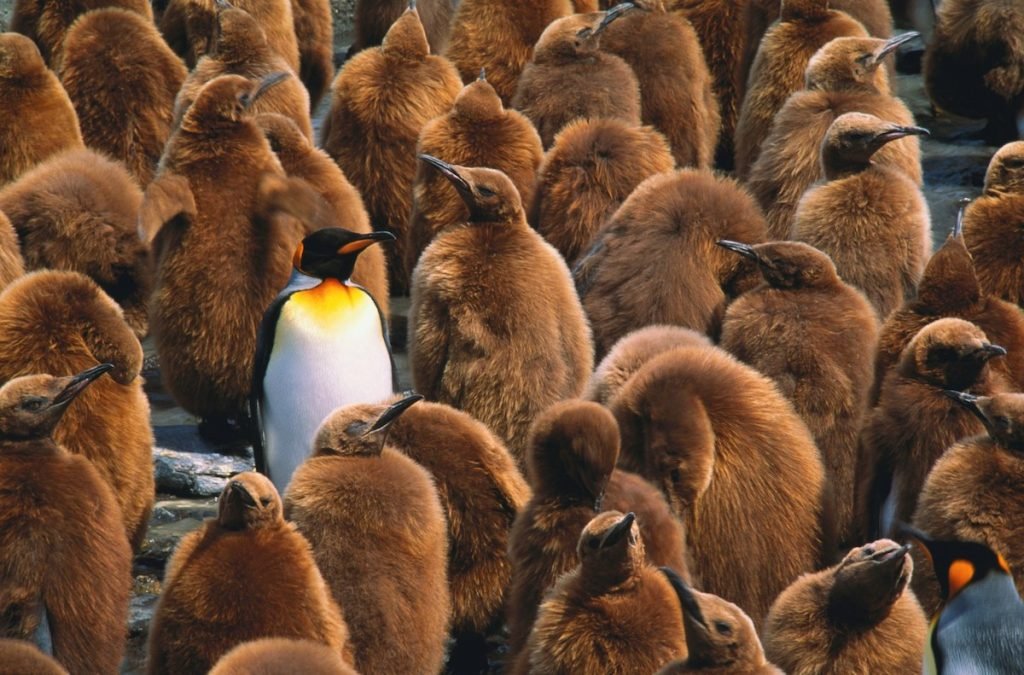
Wildlife seasonality is one of the primary factors in determining the best time to visit Antarctica. Breeding cycles, chick development, whale migration, and sea ice retreat all occur in distinct phases between November and March.
Understanding these biological timelines allows travelers to align departure dates with specific species priorities — whether that means penguin courtship, whale feeding behavior, or seal activity.
Penguin Activity
- Courtship: November
- Nesting: December
- Chicks visible: January
- Molting juveniles: February
If observing penguin chicks is a priority, January offers optimal timing.
Whale Sightings
Whale presence increases as krill concentrations rise.
Peak sightings typically occur in:
- Late January
- February
- March
February is generally considered the strongest whale month.
Seal Encounters
Seals are present throughout the season, including:
- Weddell seals
- Leopard seals
- Crabeater seals
Visibility improves as ice recedes.
Birdlife
Skua, petrel, and albatross species are commonly observed during crossings and near colonies.
Bird activity aligns closely with penguin breeding cycles.
Wildlife Cycle Summary by Species
| Species | Best Viewing Window |
|---|---|
| Adelie Penguins | November–January |
| Gentoo Penguins | December–February |
| Chinstrap Penguins | December–January |
| King Penguins (South Georgia) | January–February |
| Humpback Whales | February–March |
| Minke Whales | January–February |
| Elephant Seals | January–February |
| Leopard Seals | January–March |
This reinforces that the best time to visit Antarctica is species-dependent.
Regional Differences: Peninsula vs South Georgia vs Falklands
When determining the best time to visit Antarctica, destination scope matters. Not all itineraries are equal.
Most travelers visit the Antarctic Peninsula, but longer voyages include:
- South Georgia
- Falkland Islands
Each region has slightly different optimal timing.
Antarctic Peninsula
The Peninsula offers:
- Frequent landings
- Penguin colonies
- Whale activity
- Dramatic ice formations
Best overall timing: December through February
Sea ice retreat allows access to:
- Lemaire Channel
- Paradise Bay
- Neko Harbor
November emphasizes ice; February emphasizes whales.
South Georgia

South Georgia is wildlife-dominant rather than ice-dominant.
Peak highlights:
- Massive king penguin colonies
- Elephant seal breeding
- Fur seal activity
Best timing: Late January through February
By February:
- Penguin chicks are active
- Seal interactions increase
- Snow cover recedes
South Georgia-focused itineraries are often longer (14–20 days), making seasonal selection more strategic.
For ship class and passenger-capacity considerations, see Antarctica Cruise Ships Compared.
Falkland Islands
Falklands visits are often included in longer expeditions.
Wildlife includes:
- Black-browed albatross
- Rockhopper penguins
- Magellanic penguins
Best timing: December through February
Wind conditions can affect landings here more than on the Peninsula.
Best Time to Cruise Antarctica for Weather Conditions
Weather is often the primary concern when evaluating the best time to visit Antarctica. While the continent is inherently unpredictable, seasonal patterns provide useful guidance.
Temperature Trends
During the cruise season (October–March), coastal Antarctic temperatures typically range between:
- -5°C to 5°C (23°F to 41°F) early and late season
- 0°C to 8°C (32°F to 46°F) in peak summer
January is generally the warmest month, though “warm” remains relative. Temperatures rarely feel extreme due to layered expedition gear and windproof outerwear provided by most operators.
Cold exposure is usually manageable during landings. Wind chill and moisture matter more than air temperature.
Travelers prioritizing the mildest conditions should consider:
- Late December
- January
- Early February
Sea Ice Conditions
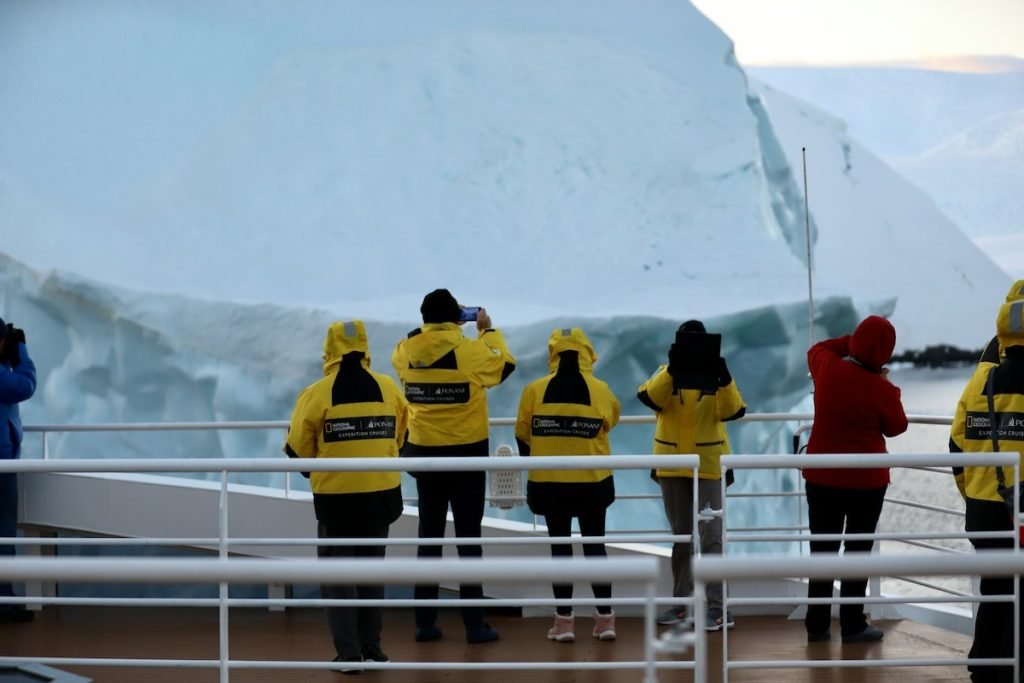
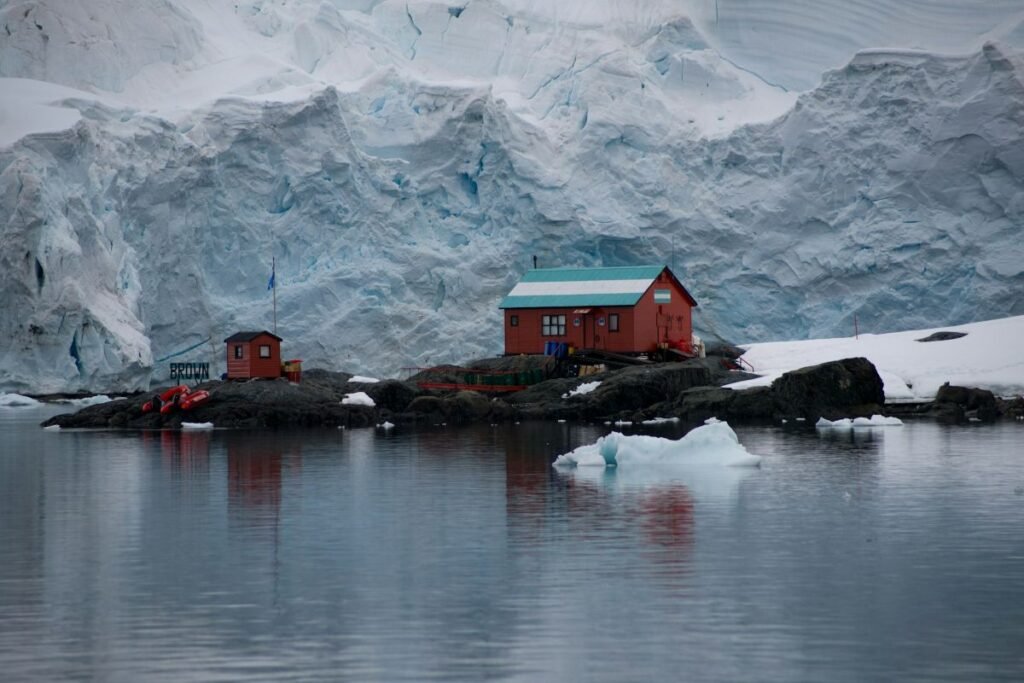
Sea ice is not simply a weather variable; it defines route accessibility.
Heavy Ice (October–November)
- Narrower ship channels
- Dramatic icebergs
- Slower navigation
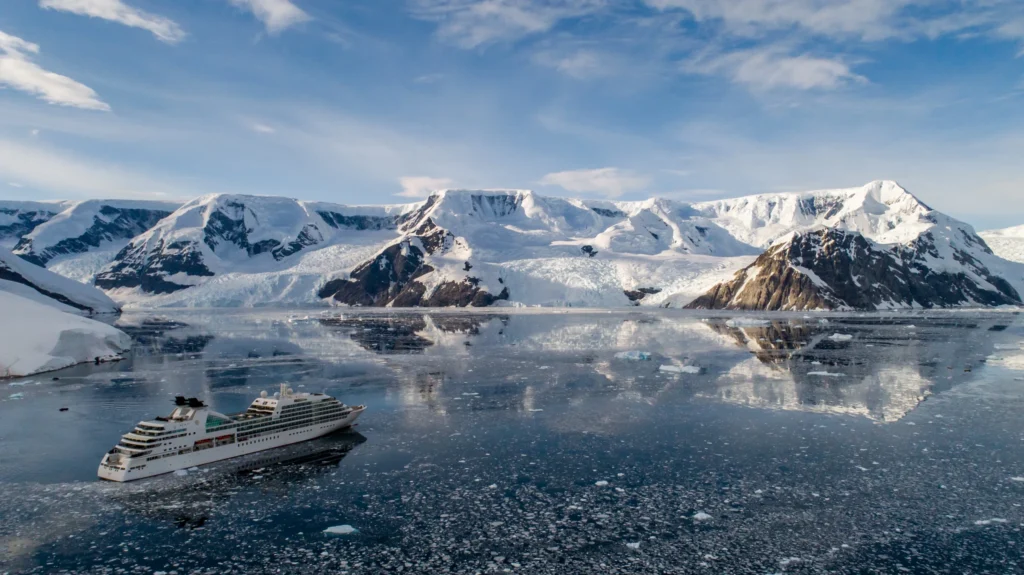
Transitional Ice (December)
- Mixed ice-water conditions
- Expanding landing access
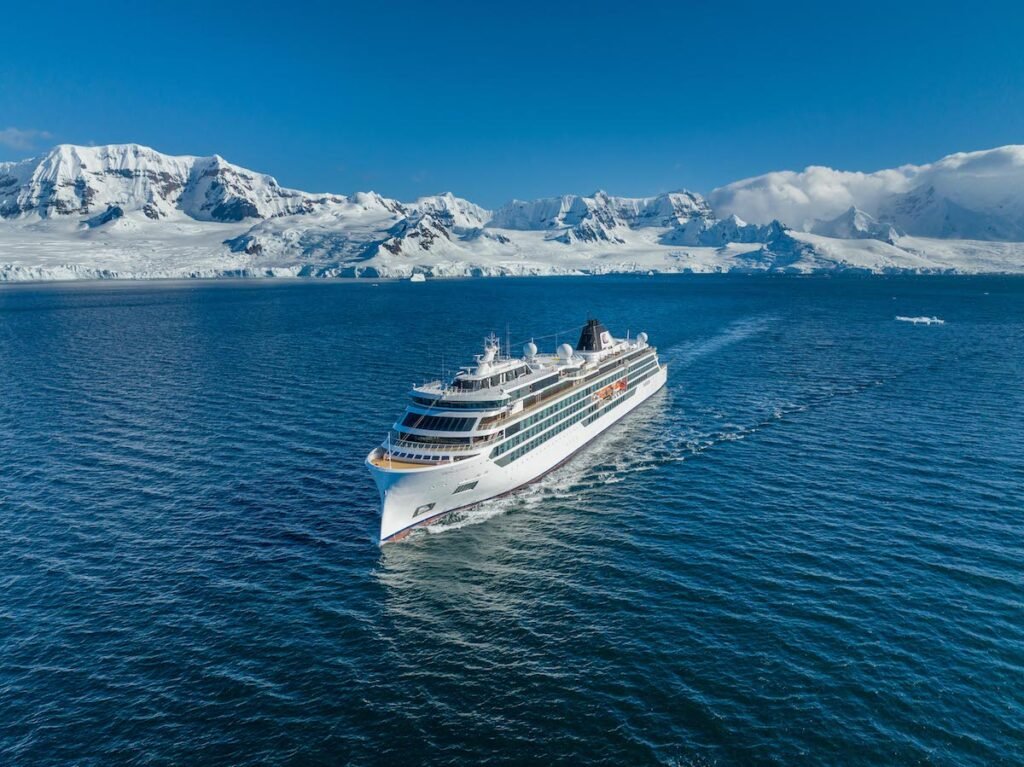
Open Water (January–February)
- Greater whale activity
- Broader route flexibility
Understanding ice patterns clarifies seasonal trade-offs. If photography of sculptural sea ice is a priority, November is ideal. If maximizing landing variety is more important, January and February provide broader access.
Drake Passage Variability
The Drake Passage crossing between South America and Antarctica is influenced by global weather systems rather than strictly by month.
Sailings depart from Ushuaia, while fly-cruise programs operate via Punta Arenas.
Seasonal tendencies:
- Early season crossings can encounter residual storm systems.
- Mid-summer crossings (December–February) statistically see more stable patterns, though variability remains.
- Late-season crossings may experience increased frontal activity.
There is no guaranteed “calmest month,” but peak summer tends to offer the most consistent crossings overall.
Risk & Variability Considerations
Antarctica remains a dynamic environment.
Potential variables include:
- Sudden wind shifts
- Snow squalls
- Ice blockages
- Landing cancellations
While January offers the most stable historical patterns, no month guarantees fixed conditions. Expedition travel inherently includes flexibility.
For a detailed comparison of flight vs sea crossing logistics and risk, see Fly the Drake vs Sail the Drake.
Best Time for Expedition Activities
While wildlife drives most travel decisions, expedition activities such as kayaking, camping, and extended hiking are also season-dependent. Sea ice conditions, daylight hours, and shoreline accessibility directly affect when these programs operate at full capacity.
Travelers prioritizing active participation should align their departure month accordingly.
Kayaking
Most kayaking programs operate:
- December
- January
- February
Open water improves stability and safety.
November departures may experience more ice interference.
Camping
Camping programs generally operate mid-season:
- Late December
- January
- February
Snow conditions stabilize by January.
Extended Hiking
Late January and February offer:
- Reduced snow cover
- Improved shoreline access
- More exposed terrain
Activity inclusions vary by operator; see What’s Included in an Antarctica Cruise? for program breakdowns.
Best Time for Photography
Photography is one of the most season-sensitive objectives in Antarctica. Light angle, snow coverage, sea ice density, wildlife behavior, and daylight duration shift materially between November and March.
Travelers prioritizing landscape composition, whale surface action, or penguin colony activity should align their departure month with specific photographic goals rather than general peak-season assumptions.
November: High Contrast Ice Photography

Advantages:
- Pristine snow cover
- Sculptural sea ice
- Minimal footprint on landscape
Light quality:
- Low-angle sunlight
- High contrast
- Blue-toned ice reflections
Best for:
- Landscape photographers
- Minimalist compositions
- Ice-dominant imagery
January: Wildlife & Human Interaction Shots
Advantages:
- Penguin chicks
- Busy colonies
- Active landings
Lighting:
- Continuous daylight
- Warmer color temperature
Best for:
- Wildlife behavioral photography
- Family-friendly imagery
- Action sequences
February–March: Whale Photography
Advantages:
- Feeding humpbacks
- Tail flukes
- Surface behavior
Open water improves whale sighting frequency.
Best for:
- Marine wildlife photographers
- Zodiac-based shooting
Daylight & Light Quality Throughout the Season
Antarctica experiences nearly 24-hour daylight in peak summer.
November
Long days, lower sun angles.
December–January
Near-continuous daylight; golden-hour effects extend for hours.
February
Gradual reduction in daylight; softer evening light returns.
March
Noticeable reduction in daylight but still extended compared to mid-latitudes.
Photographers often prefer November and late February for dynamic light quality.
Best Time to Visit Antarctica for Lower Prices
Antarctica cruise pricing follows a clear seasonal demand curve. Fares increase during peak wildlife months and holiday sailings, while early and late-season departures typically offer measurable savings.
Understanding how demand concentration affects cabin inventory and launch pricing allows travelers to secure stronger value without sacrificing core expedition experience.
Lower Price Windows
- Late October (limited inventory)
- November
- March
These months typically price 10–20% below January departures.
Reasons include:
- Lower holiday demand
- Slightly cooler conditions
- Perception bias toward January
November and March represent the strongest value periods for 2026–2028 departures.
Peak Price Windows
- Christmas departures
- New Year sailings
- Mid-January
Cabin categories, particularly balcony and suite inventory, often sell out 12–18 months in advance for these sailings.
For detailed cost breakdowns by month and cabin category, refer to the Antarctica Cruises Cost Guide (2026–2028).
Best Time to Cruise Antarctica for Fewer Crowds
Antarctica is capacity-controlled under IAATO regulations, meaning shore landings are conducted in strictly managed small groups regardless of season. Even in peak January, expedition landings do not resemble mass-market cruise crowds.
However, vessel traffic and itinerary overlap do vary by month. Early and late-season departures typically see fewer ships operating simultaneously, which can influence perceived solitude and landing flexibility.
Fewer Ships Operating
- Late October
- Early November
- Late March
These periods often see:
- Reduced vessel traffic
- Greater perceived solitude
- Higher flexibility in landing rotations
Peak Traffic
- Late December
- January
Demand concentration does not mean overcrowding, but availability of prime itineraries narrows quickly.
Travelers seeking quieter departures should target:
- Early November
- Mid-to-late March
First-Time Visitors vs Repeat Travelers
The best time to visit Antarctica also depends on whether this is your first expedition or a return voyage. Season selection becomes more strategic as experience increases and traveler priorities narrow.
First-Time Antarctica Visitors
For first-time travelers, January and early February generally provide the most balanced conditions across wildlife density, weather stability, and landing access.
Why this window works:
- Penguin chicks are visible
- Sea ice has largely receded
- Whale sightings increase
- Landing schedules are typically reliable
This combination reduces environmental variability and delivers the broadest representation of the Antarctic experience in a single voyage.
Repeat Antarctica Travelers
Returning visitors often prioritize specific phenomena rather than overall balance. Shoulder-season departures can therefore become more attractive.
November appeals to travelers focused on:
- Dramatic sea ice landscapes
- Penguin courtship behavior
- High-contrast photography
March attracts those targeting:
- Peak whale feeding activity
- Fewer operating vessels
- Late-season pricing advantages
Experience allows for narrower objectives, making early and late-season sailings strategically compelling.
Month-by-Month Decision Table
| Priority | Best Month |
|---|---|
| Lowest Pricing | November, March |
| Penguin Courtship | November |
| Penguin Chicks | January |
| Whale Sightings | February |
| Most Stable Weather | January |
| Dramatic Sea Ice | November |
| Fewer Ships | October, March |
| Holiday Travel | Late December |
This table simplifies decision-making based on individual priorities.
Frequently Asked Questions
Final Decision Framework
The best time to visit Antarctica is not universal. It depends on your primary objective:
- Wildlife density → January or February
- Whale activity → February
- Lower pricing → November or March
- Dramatic ice landscapes → November
- Holiday travel → Late December
For ship comparisons, route planning, and structural decision-making, consult the Antarctica Cruises Planning Guide for full itinerary and operator comparisons.
Antarctica’s cruise season is short, regulated, and capacity-driven. Aligning travel timing with personal priorities ensures the strongest overall experience.