Planning Your Alaska Cruise the Smart Way (2026–2028)
If you’re researching how to plan an Alaskan cruise, you’ve probably already realized something important: Alaska is not a typical cruise.
Unlike warm-weather itineraries where the ship is the main attraction, cruise Alaska itineraries are destination-driven. The scenery, wildlife, glacier access, and route design matter more than onboard water slides or nightlife.

Alaska is a bucket list destination for many travelers across North America. But the difference between a good Alaska trip and a truly exceptional Alaska experience comes down to six major planning decisions:
- Choosing the right month
- Selecting the correct Alaska cruise route
- Picking the right ship size
- Understanding glacier access
- Budgeting beyond the base fare
- Deciding whether to add Denali National Park
Many first time cruisers assume all Alaska itineraries are similar. They are not.
Why Cruise Alaska Instead of Taking a Land Tour?
Alaska is enormous. While a land-based Alaska trip offers flexibility, it also requires significant logistics — long driving distances, limited road networks, variable weather conditions, and high seasonal lodging prices.
Cruising southeast Alaska simplifies access to remote coastal areas that are not reachable by road. Many highlights — including Glacier Bay National Park, portions of the Inside Passage, and several tidewater glaciers — are best viewed from the water.
A cruise also bundles accommodations, meals, and transportation into one structured itinerary. For travelers visiting Alaska for the first time, this creates a controlled and efficient way to experience wildlife viewing, glacier scenery, and historic port towns without managing multiple hotel changes.
Land exploration still has value — especially for Denali National Park and interior Alaska — but for coastal southeast Alaska, cruising is often the most efficient foundation.
Two ships sailing in the same week can deliver dramatically different experiences depending on:
- Glacier Bay National Park access
- Hubbard Glacier inclusion
- Inside Passage vs Gulf of Alaska routing
- Time spent in port towns
- Ship size and onboard design
There are plenty of ways to experience the great land:
- Round-trip cruises from Seattle
- One-way cruises between Vancouver and Seward
- Large cruise ships operated by major cruise lines
- Smaller ships focused on wildlife viewing and natural habitats
Some travelers want a balanced cruise experience with fine dining, entertainment, and structured programming. Others want an immersive Alaska adventure centered around marine life, bald eagles, brown bears, and remote fjords.
The key is not choosing the “best Alaska cruises.”
The key is choosing the best cruise for your priorities.
This step-by-step guide will walk you through how to plan an Alaskan cruise intelligently — especially if this is your first time visiting southeast Alaska or the Gulf of Alaska region.
By the end, you’ll understand:
- When to sail
- Which Alaska itineraries fit your goals
- Whether big ships or smaller ships are right for you
- How to avoid common planning mistakes
- And how to build an Alaska experience that matches your expectations
Step 1 – Choose the Best Time to Cruise Alaska
When planning an Alaskan cruise, timing is not just about weather.
It affects:
- Wildlife viewing opportunities
- Glacier visibility
- Pricing and availability
- Crowds in port towns
- Daylight hours
- Shore excursion selection
The Alaska cruise season runs from early May through late September. Unlike other cruise regions in North America, Alaska has a short, intense sailing window — which means month selection significantly shapes your overall experience.
Below is a deeper breakdown to help you decide.
May – Early Season & Shoulder Season Value
May marks the beginning of cruise Alaska season.
Advantages:
- Lower pricing compared to peak summer
- Fewer large ships in port towns
- Snow still visible on mountain peaks
- Cleaner glacier faces after winter freeze
- Easier availability for round-trip Alaska cruises
Wildlife viewing begins increasing in May. Bald eagles are highly active, sea otters are commonly spotted along the Inside Passage, and marine life begins returning to feeding grounds.
However:
- Temperatures are cooler
- Some early-season excursions may have limited availability
- Rain is possible (though rainfall levels are often similar to mid-summer)
May is ideal for couples and retirees who prefer fewer crowds and strong value. It’s also one of the best ways to cruise Alaska without peak-season pricing pressure.
June – Longest Days & Peak Wildlife Activity
June offers nearly endless daylight in southeast Alaska.
During the summer solstice, you may experience 18+ hours of usable light. This dramatically enhances scenic cruising through:
- Glacier Bay National Park
- College Fjord
- Prince William Sound
June is one of the strongest months for wildlife viewing, including:
- Humpback whales
- Sea lions
- Bald eagles
- Marine life activity near Icy Strait Point
Weather is generally mild and stable. While rainy days can occur, Alaska does not follow a simple “early season dry / late season wet” pattern — precipitation is possible throughout the season.
For many travelers, June represents the best time balance between weather, wildlife, and daylight.

July – Warmest Weather & Peak Demand
July is the warmest month of the Alaska cruise season.
What to expect:
- Peak pricing
- Highest passenger volume
- Maximum shore excursion availability
- Long daylight hours
This is prime time for families, particularly on large cruise ships operated by:
- Princess Cruises
- Holland America Line
- Royal Caribbean International
- Norwegian Cruise Line
If warm weather is your priority, July is typically the safest choice. However, you’ll also encounter busier port towns and higher airfare.
For first time cruisers, July offers the most predictable overall conditions — but at premium pricing.
Late August – Wildlife Intensifies
Late August is often underestimated.
As salmon runs increase, brown bears and grizzly bears become more active in natural habitats, particularly near river systems accessed through shore excursions.
Wildlife viewing can be exceptional during this period.
Advantages:
- Slight pricing softening compared to July
- Strong humpback whales sightings
- Fewer family travelers as school resumes
Considerations:
- Increasing rain probability
- Shorter daylight hours
Late August is often ideal for travelers prioritizing wildlife immersion over warm weather.
Late September – Lowest Fares & Shoulder Season Calm
Late September is the end of Alaska cruise season.
You’ll find:
- Shoulder seasons pricing
- Noticeably fewer large ships
- Cooler temperatures
- Quieter port towns
There is also a small possibility of northern lights sightings, particularly on darker nights near the end of the season. However, northern lights should not be the primary reason for booking an Alaska cruise — sightings remain rare and unpredictable.
Late September works best for:
- Budget-focused travelers
- Couples comfortable with cooler weather
- Repeat Alaska visitors
Weather Reality: What Most Travelers Misunderstand
One of the biggest misconceptions about planning an Alaska trip is weather predictability.
Rainy days can happen in:
- May
- June
- July
- August
Southeast Alaska, including areas around Ketchikan and Tongass National Forest, receives significant rainfall annually.
However:
- Rain often comes in short bursts
- Scenic cruising still operates in light rain
- Wildlife viewing is often unaffected
The best way to approach Alaska weather is not to chase “perfect sunshine,” but to prepare with proper layering and waterproof gear.
Wildlife Viewing Calendar Snapshot
| Month | Whale Activity | Bear Activity | Bald Eagles | Marine Life |
|---|---|---|---|---|
| May | Moderate | Moderate | High | Increasing |
| June | Strong | Moderate | High | Strong |
| July | Strong | Moderate | High | Strong |
| Late August | Strong | High | High | Strong |
| Late September | Moderate | Moderate | Moderate | Moderate |
If wildlife viewing is your top priority, June and late August are often the strongest overall months.
Crowd Psychology & Port Congestion
When multiple large ships dock in:
- Juneau
- Skagway
- Ketchikan
Port towns can feel busy.
Shoulder seasons (May and late September) often feel calmer and more immersive.
If your ideal Alaska experience includes quieter exploration of native culture and smaller communities, early or late season sailings may better match your expectations.
Step 2 – Choose the Right Alaska Cruise Route
If you only focus on one planning decision beyond timing, make it this one.
Your Alaska cruise route determines:
- How many glaciers you see
- How much scenic cruising you get
- Whether you can add Denali National Park
- How simple your flights will be
- The overall rhythm of your Alaska experience
Many first time cruisers assume all Alaska itineraries are interchangeable.
They are not.
There are two primary Alaska cruise route styles:
- Inside Passage (round-trip cruises)
- Gulf of Alaska (one-way cruises)
Each delivers a different structure, scenery balance, and logistical experience.
Inside Passage Cruises (Round-Trip)
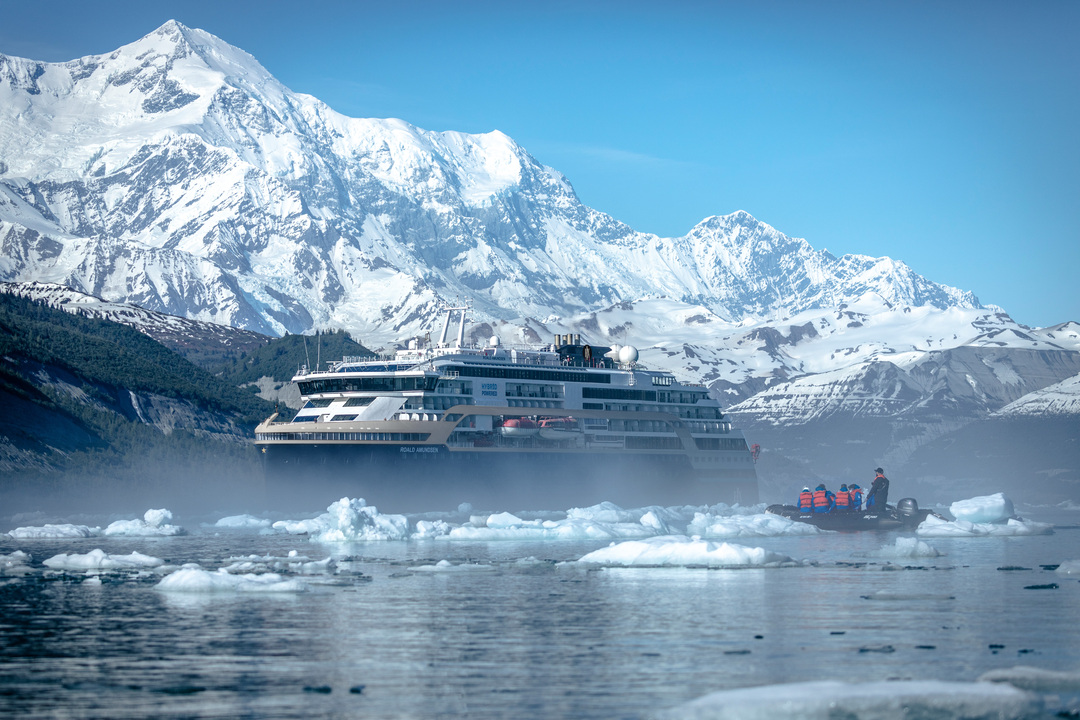
Inside Passage cruises are the most common way to cruise Alaska.
These round-trip cruises typically depart from:
- Seattle
- Vancouver
They sail north along British Columbia, enter southeast Alaska, and return to the same port.
Why the Inside Passage Is So Popular
The Inside Passage is protected water. Ships sail between islands rather than in open ocean.
Advantages include:
- Calmer seas
- Lower seasickness risk
- Simplified airfare (fly in and out of same city)
- Ideal structure for first time cruisers
- Strong balance between port towns and scenic cruising
Most large cruise ships operated by major cruise lines follow this route.
Typical Alaska Cruise Ports on the Inside Passage
Most Inside Passage itineraries include:
- Juneau
- Skagway
- Ketchikan
- Icy Strait Point
These port towns are concentrated in southeast Alaska and offer:
- Totem poles
- Gold Rush history
- Whale watching
- Tongass National Forest excursions
- Native culture experiences
Inside Passage cruises focus heavily on classic Alaska cruise ports combined with at least one glacier viewing day.
Glacier Access on Inside Passage Cruises
Glacier access varies.
Some sailings include:
- Glacier Bay National Park
- Endicott Arm
- Dawes Glacier
Glacier Bay is the most sought-after inclusion, but permits are limited. Not all round-trip Alaska cruises include it.
This is where route research becomes critical.
Gulf of Alaska Cruises (One-Way)
Gulf of Alaska cruises operate differently.
These one-way cruises sail between:
- Vancouver
- Seward (near Anchorage)
- Whittier (near Anchorage)
Instead of returning to the same port, you disembark in a different city.
What Makes the Gulf of Alaska Different
One-way cruises cover more coastline and often include:
- Hubbard Glacier
- College Fjord
- Prince William Sound
Because they travel further north, these itineraries often provide:
- More glacier time
- Larger scenic cruising windows
- Greater immersion in remote landscapes
For many travelers, Gulf of Alaska routes feel more expansive and dramatic.
The Denali Advantage

One of the biggest reasons travelers choose one-way cruises is access to Denali National Park.
When you disembark in Seward or Whittier, you are within reach of:
- Denali National Park
- The tallest peak in North America (Denali)
- Multi-day land tours
- Alaska Wildlife Conservation Center
- Kenai Peninsula exploration
If your goal is to combine cruise Alaska with a true inland Alaska adventure, the Gulf of Alaska is often the ideal way.
Round-Trip vs One-Way: What Actually Changes?
Here is a practical comparison:
| Factor | Round-Trip (Inside Passage) | One-Way (Gulf of Alaska) |
|---|---|---|
| Flights | Simpler, one airport | Multi-city airfare |
| Glacier Focus | Moderate | Stronger |
| Land Tour Access | Limited | Excellent |
| Scenic Variety | Strong | Broader & deeper |
| Best For | First time cruisers | Adventure-focused travelers |
Which Alaska Cruise Route Is Best for First Time Visitors?
If this is your first Alaska cruise and you want:
- Easy logistics
- Classic Alaska cruise ports
- Minimal flight complexity
- Balanced cruise experience
Choose the Inside Passage.
If you want:
- Maximum glacier exposure
- A deeper Alaska trip
- To add Denali National Park
- More time in dramatic wilderness areas
Choose a Gulf of Alaska one-way cruise.
Port Density & Time in Port
Another overlooked factor is time in port towns.
Round-trip Alaska cruises sometimes include:
- Shorter port calls
- More sea days
One-way cruises may include:
- Longer scenic cruising
- Fewer repetitive port stops
- Greater geographic spread
If exploring multiple port towns is your priority, Inside Passage itineraries may suit you better.
If scenic immersion matters more than shopping or walking tours, Gulf of Alaska routes deliver more raw landscape.
Departure City Matters
Round-trip cruises often depart from:
- Seattle
- Vancouver
Occasionally, repositioning cruises may sail from:
- San Francisco
- San Diego
However, these longer departures add extra sea days and may reduce time in Alaska itself.
For most travelers, Seattle and Vancouver remain the most efficient departure points.
Glacier Density: Not All Itineraries Are Equal
Two cruises labeled “7-night Alaska” can be very different.
One may include:
- Glacier Bay National Park
- College Fjord
Another may only include:
- A short scenic pass by one glacier
Always review:
- Number of glacier days
- Total hours allocated to scenic cruising
- Whether ranger commentary is included
Glacier time often defines whether your Alaska experience feels extraordinary or average.
Step 3 – Choose the Right Cruise Line & Ship Size

After choosing the best time and selecting your Alaska cruise route, the next critical decision is your cruise line and ship size.
In Alaska, ship size meaningfully shapes your experience.
There are three primary categories:
- Large mainstream cruise ships (2,000–4,000 guests)
- Expedition-style mid-size ships (300–400 guests)
- Small ship cruise operators (under 150 guests)
Each delivers a different version of the Alaska experience.
Large Mainstream Cruise Ships (2,000–4,000 Guests)
Most travelers cruise Alaska with major cruise lines, including:
- Princess Cruises
- Holland America Line
- Royal Caribbean International
- Norwegian Cruise Line
These vessels typically carry between 2,000 and 4,000 passengers and follow classic Inside Passage and Gulf of Alaska itineraries.
What Large Ships Do Well in Alaska
- Broad dining options, including fine dining
- Enclosed observation lounges for rainy days
- Multiple outdoor decks and hot tubs
- Organized shore excursions
- Structured daily programming
- Competitive pricing
For many first time cruisers, this balanced cruise experience offers comfort, predictability, and strong value.
Princess Cruises and Holland America Line in particular have deep Alaska heritage and frequent access to Glacier Bay National Park.
Expedition-Style Mid-Size Ships (300–400 Guests)
This is where HX Expeditions enters the conversation.
HX operates expedition-style vessels in Alaska that typically carry around 300–400 guests — significantly smaller than mainstream ships, but larger than ultra-small expedition vessels.
This category offers a hybrid experience.
What Mid-Size Expedition Ships Offer
- More personalized service than large ships
- Strong educational programming
- Expedition teams onboard
- Closer scenic positioning in fjords
- More focus on wildlife and natural habitats
However:
- They still retain cruise-level comfort
- Dining and cabin standards are elevated
- Pricing sits between mainstream and ultra-expedition
For travelers who want:
- Fewer crowds
- More immersion
- Strong wildlife viewing
- But still want comfortable cabins
Mid-size expedition ships like those from HX Expeditions can be an ideal balance.
They are particularly appealing to couples and retirees seeking deeper Alaska adventure without sacrificing comfort.
Small Ship Cruise Operators (Under 150 Guests)
At the most immersive end of the spectrum are true small ship cruise operators and expedition companies.
These vessels:
- Carry 50–150 guests
- Access narrow fjords
- Conduct Zodiac landings
- Focus heavily on marine life and natural habitats
- Spend extended time near glaciers
Operators such as National Geographic-Lindblad Expeditions emphasize exploration over entertainment.
What You Gain
- Deeper wildlife immersion
- Extended glacier proximity
- Remote anchorage access
- Intimate group experience
What You Trade Off
- Higher cost
- Limited onboard entertainment
- Fewer dining options
- Smaller cabin inventory
These cruises are less about traditional cruise structure and more about expedition-style Alaska adventure.
Large Ships vs Mid-Size vs Small Ships – Clear Comparison
| Factor | Large Ships | Mid-Size (HX) | Small Ships |
|---|---|---|---|
| Passenger Count | 2,000–4,000 | 300–400 | 50–150 |
| Price | Lower | Mid-range | High |
| Wildlife Immersion | Moderate | Strong | Very High |
| Onboard Amenities | Extensive | Comfortable | Limited |
| Glacier Positioning | Good | Better | Best |
| Educational Focus | Light | Moderate | Strong |
Which Category Is Right for You?
Choose a large mainstream cruise ship if you want:
- Structured programming
- Multiple dining venues
- Family-friendly flexibility
- Lower pricing
Choose a mid-size expedition ship like HX Expeditions if you want:
- Fewer crowds
- Stronger wildlife viewing
- Educational enrichment
- Balanced comfort
Choose a small ship cruise if you want:
- Maximum immersion
- Remote access
- An expedition-style Alaska experience
Planning Insight: Prioritize Route Over Ship
One of the biggest mistakes when planning an Alaskan cruise is choosing a ship first and ignoring the itinerary.
In Alaska:
- Route matters most
- Glacier access matters second
- Ship size enhances the experience
Even the most luxurious large cruise ship cannot compensate for a weak Alaska cruise route.
Step 4 – Budget Strategically for Your Alaska Cruise
One of the most common planning mistakes is focusing only on the base cruise fare.
In Alaska, the advertised fare is often just the starting point.
Your total Alaska experience cost depends on five major components:
- Cruise fare
- Cabin category
- Shore excursions
- Flights & transfers
- Optional land extensions
Understanding how these pieces interact is essential when learning how to plan an Alaskan cruise properly.
What Does an Alaska Cruise Really Cost?
For 2026–2028 sailings, typical price ranges per person:
| Category | Estimated Range |
|---|---|
| Inside cabin | $1,200–$2,000 |
| Balcony cabin | $2,000–$4,000 |
| Suite | $4,000–$8,000+ |
| Mid-size expedition (300–400 guests) | $4,000–$8,000 |
| Small ship cruise (under 150 guests) | $6,000–$15,000+ |
| Shore excursions (total) | $400–$1,200 |
| Multi-day land tours | $1,000–$3,000 |
Prices vary based on:
- Month (May and late September often offer best deals)
- Route (Inside Passage vs Gulf of Alaska)
- Glacier Bay inclusion
- Ship size
- Cabin location
Shoulder Seasons vs Peak Season Pricing
May and late September are typically the best value sailings.
You’ll often find:
- Lower cruise fares
- Easier balcony availability
- Reduced airfare demand
July commands the highest pricing due to:
- Warmest weather
- School vacations
- High demand for Glacier Bay sailings
If flexibility allows, shoulder seasons can reduce overall cost without dramatically reducing wildlife viewing opportunities.
The Balcony Upgrade Decision
Many travelers debate whether a balcony is worth it.
In Alaska, the answer is more nuanced than in warm-weather cruises.
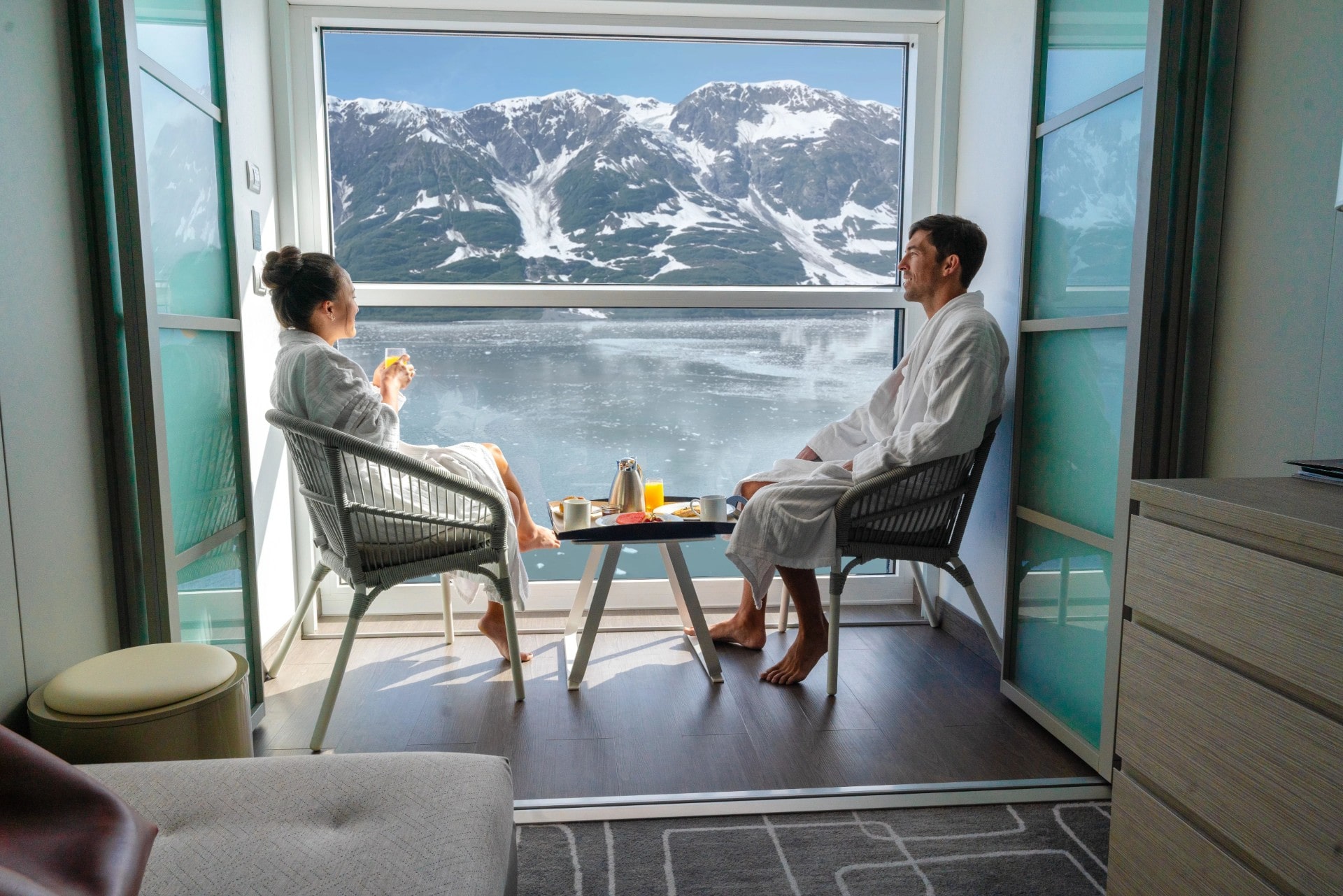
Balcony cabins typically add $800–$1,500 per person.
However, they provide:
- Private glacier viewing
- Wildlife spotting opportunities
- Shelter during rainy days
- Extended scenic comfort
If scenic cruising through Glacier Bay National Park, Hubbard Glacier, or College Fjord is central to your Alaska trip, a balcony often justifies the upgrade.
Shore Excursions: The Real Budget Driver
Alaska is not a “stay on the ship” itinerary.
Most travelers book multiple shore excursions.
Popular options include:
- Dog sledding by helicopter
- White Pass & Yukon Route Railway (Gold Rush history)
- Whale watching for humpback whales
- Brown bears viewing in natural habitats
- Glacier trekking
- Cultural tours focused on native culture
Expect:
- $150–$250 for basic tours
- $300–$600 for premium excursions
It’s easy to spend $800–$1,200 per person on excursions alone.
This is where many budgets expand beyond expectations.
Flight Costs & Departure Logistics
Round-trip cruises from Seattle simplify airfare.
One-way cruises between Vancouver and Seward or Whittier require:
- Multi-city flights
- Possible overnight hotel stays
- Transfer coordination
Flights to Anchorage (for Gulf of Alaska itineraries) can fluctuate significantly based on season and booking timing.
Airfare is often the most unpredictable cost variable.
Big Ships vs Expedition Pricing Psychology
Large cruise ships operated by major cruise lines offer lower base fares because:
- Higher passenger capacity
- Greater onboard revenue streams
- Scaled operations
Mid-size expedition ships like HX Expeditions cost more upfront but often include:
- Educational programming
- Expedition teams
- Enrichment lectures
- Smaller group experiences
Small ship cruise operators command the highest pricing due to:
- Limited passenger capacity
- Remote access
- High crew-to-guest ratios
Choosing the cheapest fare does not always mean choosing the best value.
When Do Alaska Cruise Deals Appear?
Alaska cruises rarely see extreme last-minute discounts during peak July sailings.
However:
- Shoulder season departures may soften
- Inside cabins discount earlier than balconies
- Repositioning cruises from San Francisco or San Diego occasionally offer value
For first time cruisers, booking 6–12 months in advance typically secures:
- Better cabin location
- Stronger glacier access
- More excursion availability
Waiting too long can limit Glacier Bay sailings and premium cabin categories.
Best Time to Book an Alaska Cruise
The strongest cabin inventory and glacier-focused itineraries are typically available when cruise lines first release Alaska sailings — often 12 to 18 months in advance.
Booking early allows you to:
- Secure balcony cabins in prime locations
- Lock in Glacier Bay departures
- Choose optimal sailing months
- Access early promotional pricing
Wave season (January through March) may offer promotional incentives such as onboard credit, Wi-Fi packages, or beverage inclusions. However, highly desirable summer sailings rarely see dramatic last-minute discounts.
If Alaska is a bucket list destination, early planning generally delivers the strongest combination of price and selection.
Travel Agent vs Booking Direct
Working with a cruise-focused travel agent can provide:
- Price monitoring
- Cabin location advice
- Excursion strategy
- Onboard credit opportunities
- Simplified multi-city flight coordination
If pricing is equal, expert guidance often enhances overall planning confidence.
Budgeting Reality Check
When planning your Alaska trip, a realistic per-person total (including excursions and airfare) often falls between:
- $2,500–$5,000 for mainstream cruises
- $5,000–$10,000+ for expedition-style voyages
Understanding this range early prevents frustration later.
Alaska is not the cheapest cruise destination — but for many travelers, it delivers unmatched scenery and wildlife value.
Step 5 – Choose the Right Cabin for the Best Alaska Experience
In most cruise destinations, cabin choice is a comfort decision.
In Alaska, it’s a strategic one.
Because Alaska itineraries include extended scenic cruising through:
- Glacier Bay National Park
- Hubbard Glacier
- College Fjord
- Prince William Sound
Your cabin can significantly affect how you experience these moments.
Balcony vs Inside: The Real Question
You already know the basic trade-off:
| Feature | Inside Cabin | Balcony Cabin |
|---|---|---|
| Cost | Lower | Higher |
| Natural light | None | Yes |
| Private outdoor space | No | Yes |
| Glacier viewing | Public decks only | Private |
But the deeper question is not “Is a balcony nice?”
It’s “How central is scenic cruising to your Alaska experience?”
When a Balcony Is Worth It in Alaska
A balcony cabin makes sense if:
- Glacier viewing is a top priority
- You want private wildlife spotting
- You prefer quiet mornings over crowded decks
- You value flexible scenic access
During glacier days, public decks can become crowded, especially on large cruise ships carrying 3,000+ passengers.
A balcony allows you to:
- Step outside instantly
- Watch calving events without fighting for rail space
- Stay warm inside between viewing sessions
For many couples and retirees, this upgrade enhances the overall Alaska experience.When an Inside Cabin Still Works
An inside cabin can still be a smart choice if:
- You plan to spend most scenic time on open decks
- You’re traveling on a tighter budget
- You prioritize shore excursions over cabin time
- You are on a mid-size expedition ship with better shared viewing areas
On smaller ships and expedition-style vessels, public observation areas are often less crowded, making private balconies less essential.
Cabin Location: Forward, Midship, or Aft?
Beyond category, cabin location also matters.
Midship Cabins
- Most stable
- Ideal for motion-sensitive travelers
- Balanced access to elevators
Recommended for first time cruisers concerned about movement, especially on Gulf of Alaska routes where open water segments are longer.
Forward Cabins
- Often quieter
- Sometimes offer strong viewing angles
However:
- More motion in rougher seas
- Further walk to dining and entertainment areas
Aft Cabins
- Often provide dramatic wake views
- Can be quieter
But:
- Some experience vibration
- May not offer ideal glacier-facing positioning
Port Side vs Starboard: Does It Matter?
This is one of the most frequently asked Alaska cruise questions.
The honest answer:
It depends on your Alaska cruise route.
On Inside Passage round-trip cruises:
- Scenic viewing opportunities rotate
- Ships often turn 360 degrees during glacier viewing
On Gulf of Alaska one-way cruises:
- Northbound and southbound directions can slightly favor one side
However, modern cruise ships typically rotate or reposition during glacier approaches to give both sides viewing opportunities.
In most cases, cabin side matters less than having balcony access at all.
Deck Level Considerations
Higher decks:
- Offer stronger panoramic views
- Are closer to pool decks and hot tubs
Lower decks:
- Often feel more stable
- Are closer to main dining and theater venues
In Alaska, upper-deck balconies often provide better glacier photography angles, especially when sailing through College Fjord or approaching Hubbard Glacier.
Large Ships vs Smaller Ships: Cabin Experience Differences
On large cruise ships:
- Balcony cabins vary widely in size
- Public viewing decks can become busy
- Enclosed observation lounges are valuable on rainy days
On mid-size expedition ships such as HX Expeditions vessels:
- Public viewing spaces are less crowded
- Educational briefings often accompany scenic cruising
- Cabins may prioritize functionality over luxury
On small ship cruises:
- Balconies may not be standard
- Guests often gather on open decks for immersive viewing
Ship size influences how essential a private balcony becomes.
Glacier Viewing Strategy: Public vs Private
Even with a balcony, many experienced Alaska travelers recommend:
- Spending at least part of glacier days on open decks
- Moving around the ship to change perspective
- Visiting higher observation areas for panoramic views
The best way to experience glaciers is often a combination of:
- Private balcony viewing
- Open-deck immersion
- Lounge-based observation during rainy moments
Privacy vs Participation
Some travelers prefer:
- Quiet, reflective glacier viewing from their own space
Others prefer:
- Gathering on deck
- Listening to park rangers
- Sharing the moment socially
Neither approach is wrong — but cabin choice influences your options.
Step 6 – Glacier Strategy: The Make-or-Break Factor in an Alaska Cruise
If you remember only one planning principle from this guide, make it this:
Not all Alaska cruises are equal — and glacier access is the reason why.
Two 7-night Alaska itineraries can look similar on paper, yet deliver dramatically different experiences depending on:
- Which glaciers are included
- How long scenic cruising lasts
- Whether Glacier Bay National Park access is secured
- How close the ship can approach
Glacier days are not just photo opportunities. They are the emotional high point of most Alaska trips.
Why Glacier Access Matters So Much
Unlike port towns — where you can book shore excursions — glacier viewing is built into the itinerary.
You cannot “add” Glacier Bay later if your sailing doesn’t include it.
This is why glacier strategy must be decided before you choose your ship.
Glacier Bay National Park – The Benchmark

Glacier Bay National Park is widely considered the gold standard of Alaska glacier cruising.
What makes it different?
- Multiple tidewater glaciers in one protected area
- National Park Service rangers boarding the ship
- Wildlife viewing alongside glacier scenery
- Extended scenic cruising (often 6–10 hours)
Ships entering Glacier Bay typically rotate slowly, allowing both port and starboard guests strong viewing angles.
Permit Reality
Access to Glacier Bay is strictly limited by daily permits issued by the National Park Service.
Only a small number of ships are allowed in per day.
Cruise lines with historically strong Glacier Bay presence include:
- Princess Cruises
- Holland America Line
Not all Alaska itineraries — even from the same cruise line — include Glacier Bay.
You must confirm this specifically.
What to Expect During Glacier Bay Scenic Cruising
A typical Glacier Bay day includes:
- Early morning entry
- Slow scenic sailing
- Park ranger commentary
- Multiple glacier viewpoints
- Marine life sightings
You may see:
- Harbor seals on ice
- Sea otters floating near bergy bits
- Bald eagles
- Occasionally humpback whales
The stillness and scale are what leave the strongest impression.
Hubbard Glacier – The Dramatic Giant
Hubbard Glacier, located in the Gulf of Alaska, is a different kind of experience.
It is:
- One of the largest tidewater glaciers in North America
- Known for active calving events
- Towering and visually dramatic
Unlike Glacier Bay, which contains multiple glaciers, Hubbard Glacier is a single massive ice wall.
When calving occurs — chunks of ice breaking off — the sound can echo across the water.
Weather & Access Considerations
Hubbard Glacier is more exposed to open water conditions.
If ice or weather conditions prevent close approach, ships may need to reposition.
However, when conditions are favorable, Hubbard often provides some of the best views on any Alaska cruise route.
College Fjord – Glacier Density in One Passage
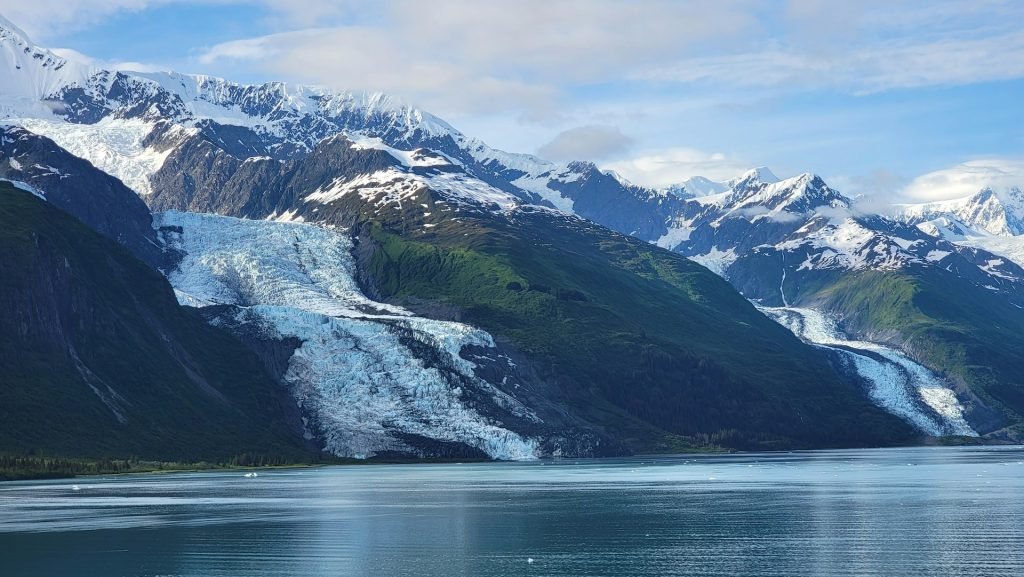
College Fjord, typically included on one-way cruises, offers:
- Multiple glaciers within a narrow fjord
- Calm water scenic cruising
- Less crowding than Glacier Bay
Ships sail slowly through the fjord, allowing extended viewing of several glacier faces in one stretch.
It may not have the ranger narration of Glacier Bay, but visually it can be just as impressive.
Prince William Sound & Other Scenic Glaciers
Some Alaska itineraries include scenic cruising through Prince William Sound or lesser-known glacier arms.
These routes offer:
- Quieter environments
- Dramatic mountain backdrops
- Deep fjord landscapes
These scenic segments are particularly common on Gulf of Alaska one-way cruises.
Some Inside Passage itineraries also include scenic cruising through Tracy Arm or Endicott Arm, where ships navigate narrow fjords toward the Twin Sawyer Glaciers or Dawes Glacier. Nearby Misty Fjords National Monument — often accessed from Ketchikan — features dramatic granite cliffs, waterfalls, and forested wilderness landscapes. While not full glacier days, these scenic segments enhance overall glacier density and fjord immersion.
Calving Expectations: What’s Realistic?
One common misconception — often fueled by social media — is expecting constant dramatic calving.
In reality:
- Calving is unpredictable
- Some days are quiet
- Large events are rare
What makes glacier days memorable is not just calving — it’s scale, silence, and atmosphere.
The stillness of a glacier field can be more powerful than a single dramatic ice fall.
Glacier Viewing Strategy Onboard
To maximize glacier days:
- Wake early — prime viewing often occurs in the morning
- Dress in layers (wind chill near glaciers is significant)
- Rotate viewing locations
- Spend time on open decks as well as your balcony
Even if you book a balcony, walking to higher decks often provides better panoramic angles.
Large Ships vs Expedition Ships Near Glaciers
Large cruise ships:
- Maintain safe but regulated distances
- Rotate slowly for viewing
- Provide ranger narration in Glacier Bay
Mid-size expedition ships like HX Expeditions vessels:
- May position more flexibly
- Offer stronger educational briefings
- Provide deeper interpretation
Small ships:
- Sometimes approach closer
- Can anchor in quieter inlets
- Emphasize immersive glacier interaction
However, safety regulations apply to all vessels.
Glacier Density Comparison
| Feature | Glacier Bay | Hubbard Glacier | College Fjord |
|---|---|---|---|
| Number of Glaciers | Multiple | One dominant glacier | Several in one fjord |
| Ranger Commentary | Yes | No | No |
| Scenic Duration | Long | Moderate | Moderate |
| Best For | First-time visitors | Dramatic impact | Glacier variety |
The Glacier Planning Rule
Before booking, verify:
- How many glacier days are included?
- Is Glacier Bay National Park specifically listed?
- How long will the ship spend in scenic cruising?
- Is the itinerary Inside Passage or Gulf of Alaska?
Do not assume all Alaska itineraries provide the same glacier access.
This is the single biggest difference between a good Alaska cruise and a transformative one.
Alaska Cruise Planning Framework (2026–2028)
After reviewing timing, routes, cruise lines, cabins, glacier access, and land options, here is the structured way to plan your Alaska cruise intelligently.
Step 1 – Define Your Priority
What matters most?
- Wildlife viewing
- Glacier exposure
- Comfort & amenities
- Budget
- Land exploration (Denali National Park)
Without clarity here, every decision becomes confusing.
Step 2 – Select the Best Time
- Want warmer weather → July
- Want strong wildlife → June or late August
- Want best value → May or late September
- Want fewer crowds → Shoulder seasons
Step 3 – Choose Your Route
- Prefer simplicity → Inside Passage (round-trip)
- Want deeper immersion → Gulf of Alaska (one-way)
- Planning Denali add-on → One-way is ideal
Step 4 – Match Ship Size to Travel Style
- Entertainment + variety → Large cruise ship
- Fewer crowds + wildlife focus → Mid-size expedition ship (e.g., HX Expeditions)
- Maximum immersion → Small ship cruise
Step 5 – Budget Beyond the Base Fare
Remember to account for:
- Shore excursions
- Cabin upgrades
- Flights
- Land extensions
- Gratuities
Alaska is excursion-heavy. Budget realistically.
Step 6 – Confirm Glacier Access
Before booking, verify:
- Is Glacier Bay National Park included?
- How many glacier days are scheduled?
- How long is scenic cruising?
Glacier time defines the Alaska experience.
Final Planning Principle: Structure Creates the Experience
Alaska is not a cruise you book casually.
It is a destination defined by:
- Glacier access
- Route design
- Wildlife timing
- Ship size selection
- Strategic budgeting
- Land extension decisions
The difference between a good Alaska cruise and an extraordinary one rarely comes down to the newest ship or the lowest price.
It comes down to alignment.
Alignment between:
- Your priorities and the sailing month
- Your travel style and the ship category
- Your expectations and the glacier itinerary
- Your budget and the total experience cost
When those variables align, Alaska delivers something few destinations in North America can match — scale, silence, wildlife, and raw landscape.
Plan deliberately. Choose your route carefully. Confirm your glacier access. Budget realistically.
Then let Alaska do the rest.
That is how you plan an Alaskan cruise the smart way.