Hurtigruten vs HX Norway Voyages: What’s the Difference?
If you’re planning a Norway cruise, you’ll likely come across two very similar names: Hurtigruten and HX Expeditions. They share history and heritage — but today, they offer two very different ways to experience Norway.
For a complete overview of routes, pricing, cruise styles, and seasonal considerations, see our Norway Arctic Cruises: Complete Planning Guide (2026).
Before diving into details, here’s the simplest way to understand the difference:
Hurtigruten = Norway’s classic coastal voyage
HX = Expedition-style exploration of Norway’s wild nature
If that already clarifies things, great. If not, let’s break it down properly.
If you’re comparing specific 2026 itineraries across multiple operators, see our full analysis: Best Northern Lights Cruise 2026: 7 Top Itineraries Compared.
Hurtigruten vs HX Norway Voyages — Quick Comparison
| Feature | Hurtigruten Coastal | HX Expedition |
|---|---|---|
| Voyage Style | Classic coastal route | Expedition-style exploration |
| Port Stops | 30+ frequent stops | Fewer ports, more landings |
| Focus | Scenic & cultural | Nature & wilderness immersion |
| Included Activities | Optional excursions | Daily guided activities included |
| Expedition Team | Limited | Dedicated expedition team |
| Target Traveler | Relaxed explorer | Active nature-focused traveler |
| Northern Lights Focus | Seasonal | Dedicated aurora-focused sailings |
Why Hurtigruten and HX Are Separate Brands
Although they share a common history, Hurtigruten and HX now operate as distinct cruise brands with different focuses.
HX was formerly known as Hurtigruten Expeditions. In recent years, the expedition division was separated into its own standalone brand — HX — dedicated exclusively to expedition-style cruising.
Hurtigruten continues to operate Norway’s historic Coastal Express route, sailing between Bergen and Kirkenes with frequent port calls and a strong connection to local communities along the coast.
The split helps clarify positioning:
- Hurtigruten focuses on traditional Norwegian coastal voyages with regular port stops.
- HX focuses on expedition cruising, with small-boat landings, nature immersion, and science-led exploration.
Understanding this distinction makes it much easier to choose the right experience for your Norway voyage.
1. Type of Voyage & Style
Both Hurtigruten and HX operate along the Norwegian coast, but they are designed for very different types of travelers. Before looking at itineraries, ships, or onboard experience, it helps to understand the fundamental difference in voyage style — because this influences everything from daily rhythm to what you’ll actually do once you’re on board.
Hurtigruten – Classic Coastal Voyages

- Focus: Traditional coastal cruise along Norway’s coastline with frequent port calls.
- Experience Type: A hybrid of ferry transport + scenic cruise — often called the original Norwegian coastal voyage.
- Atmosphere: Less expedition-oriented, more about scenic immersion, culture, and local visits.
- Stops: Many (often 30+), including small towns, fishing villages, fjords, and Arctic ports.
- Typical Itineraries:
- Bergen ↔ Kirkenes roundtrip (~12 days)
- Short coastal hops (3–7 days)
- Seasonal lines (e.g., North Cape Line, Svalbard Line)
Best for: Travelers who want a classic Norwegian coastal experience + lots of short stops to explore towns, fjords, and community visits.
HX – Expedition Cruising
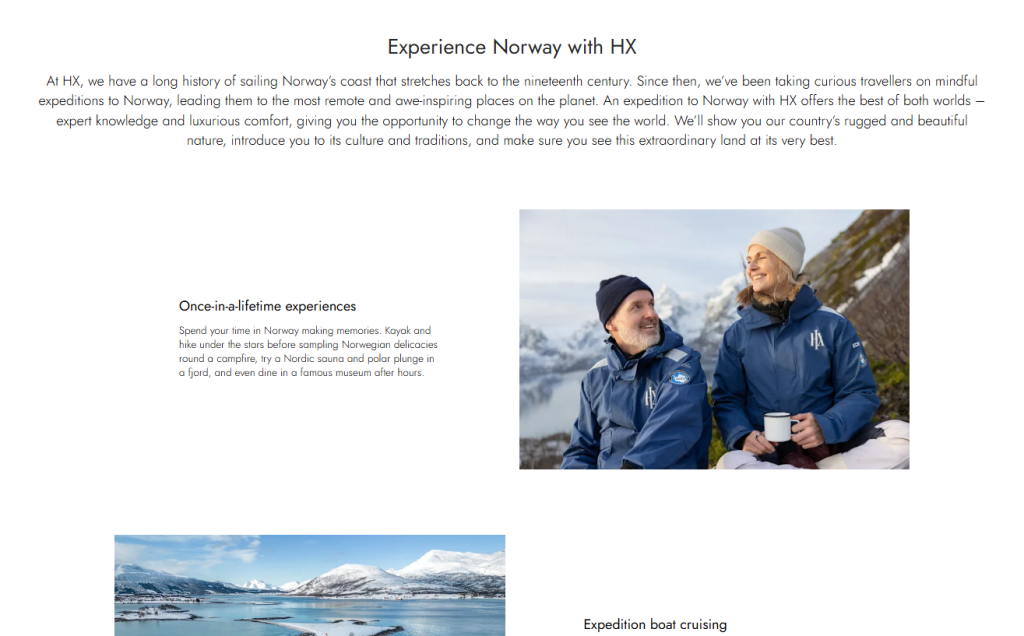
- Focus: Expedition-style journeys along Norway’s coast and into remote Arctic nature.
- Experience Type: Adventure and exploration — with onboard expert teams, small boat landings, hikes, kayak trips, and wildlife watching.
- Atmosphere: More active and immersive — fewer towns/ports, more nature & science programs.
- Typical Activities:
- Kayaking in fjords
- Snowshoe hikes
- Northern Lights watching (with “Northern Lights Promise”)
- Whale, bird, and Arctic wildlife sightings
- Science lectures and educational programs
Best for: Travelers seeking wilderness, adventure, and nature immersion rather than traditional port-to-port cruising.
2. Itineraries & Routes
If you like knowing exactly where you’ll be each day, itineraries matter. If you prefer flexibility and discovery, routes matter in a different way. This section looks at how Hurtigruten and HX plan their Norway voyages — and what that means for your experience as a traveler.
Hurtigruten Itineraries

- Very structured coastal routes with regular departures almost year-round.
- Frequent stops mean you can step ashore, visit towns, and experience regional culture more regularly.
- A mix of:
- Classic Coastal Express routes
- Arctic/North Cape themed sails
- Svalbard Line (Arctic wilderness)
HX Itineraries

- Designed as longer expedition experiences focusing on nature and landscapes rather than port tourism.
- Often includes Lyngen Alps, Lofoten, Vesterålen and Senja regions as part of scenic exploration.
- Activities such as landings with smaller boats and guided hikes mean itineraries are more flexible and dependent on weather and wildlife opportunities vs. strict schedule.
If you’re comparing how these itineraries fit within the broader Norway Arctic cruise landscape, our full Norway Arctic cruise planning guide explains route variations and regional differences in detail.
3. Onboard Experience & Inclusions
The differences between Hurtigruten and HX Expeditions don’t stop once you step on board. From daily programming to what’s included in the fare, each company has designed its ships to support a specific type of journey. This section looks at what life on board is like with Hurtigruten and HX — and what’s typically included in each experience.
Hurtigruten
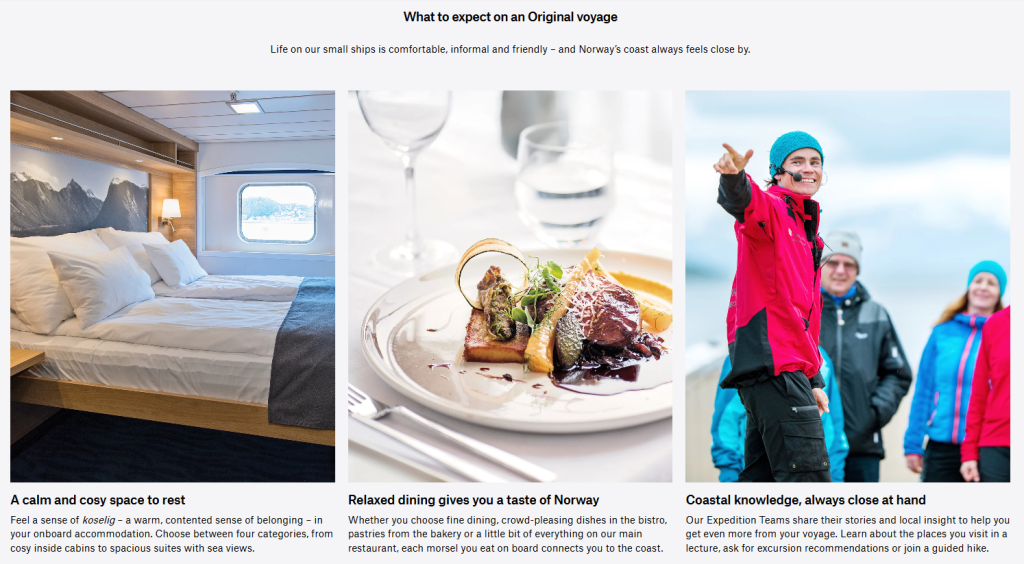
- Comfortable cruise experience with cabins, meals, and scenic decks.
- More traditional cruise amenities with focus on scenic views and local culture.
- Meals and excursions vary by booking type; some are a la carte.
HX Expedition

- Expedition-focused ships with onboard science centers, expert guides, and lectures.
- Daily included activities and excursions (small boat explorations, hikes, wildlife watching).
- All cruises include meals, drinks, gratuities, and guided activity programs in price.
- Northern Lights Promise: if no aurora are seen on certain cruises, you may get future cruise credit.
For a detailed breakdown of what HX all-inclusive covers, see our guide to the HX all-inclusive policy.
4. Typical Traveler Profiles
| Feature / Traveler Type | Hurtigruten | HX Expedition |
|---|---|---|
| Scenic & cultural interest | ⭐⭐⭐⭐ | ⭐⭐⭐ |
| Adventure & exploration | ⭐⭐ | ⭐⭐⭐⭐⭐ |
| Wildlife & nature immersion | ⭐⭐ | ⭐⭐⭐⭐ |
| Frequent local stops | ⭐⭐⭐⭐ | ⭐⭐ |
| Educational programming onboard | ⭐⭐ | ⭐⭐⭐⭐ |
| Flexible expedition landings | ❌ | ✅ |
| Arctic/remote nature focus | ⭐⭐ | ⭐⭐⭐⭐ |
Summary — When to Choose What
Choose Hurtigruten if you want:
- A traditional Norwegian coastal voyage
- Frequent town visits
- A relaxed, scenic journey
- A route that feels deeply connected to local life
Choose HX Expedition if you want:
- An active expedition experience
- To explore Norway’s wild landscapes
- Wildlife, hiking, and hands-on discovery
- A deeper understanding of nature and science
Still deciding whether an expedition-style voyage justifies the higher price point? Review our in-depth breakdown: Is Arctic Cruise Worth It? (2026–2028 Planning Guide).
Norway Winter Sailings 2026 – Key Dates & Moments
One of the biggest advantages of travelling along the Norwegian coast in winter is that every week feels different. Light, atmosphere, local celebrations, and natural milestones all shift as the season unfolds.
If you’re sailing between January and March 2026, here’s what you can expect during each part of the season — and why timing your trip matters.
If seeing the aurora is your priority, read our complete Northern Light Cruise: Complete Guide to Seeing the Aurora at Sea for a deeper look at routes, cruise lines, and timing.
January 17 – January 24, 2026
Deep Winter & the Return of the Sun
This sailing takes place during the heart of Arctic winter. Northern Norway is still wrapped in polar night, creating perfect conditions for Northern Lights spotting and dramatic winter scenery.
Don’t miss: January 21 – First sunrise in Tromsø
Known locally as Soldagen, this marks the sun’s return after weeks below the horizon. It’s a surprisingly emotional moment for locals — and a special experience for visitors lucky enough to be there.
January 24 – January 31, 2026
Long Nights, Growing Light
The polar night is officially over in Tromsø, and daylight increases by several minutes each day. Aurora conditions remain excellent, but there’s a subtle shift in atmosphere — locals feel the season turning.
Why it’s special:
- Still peak Northern Lights season
- Better visibility for photography during the day
- A calmer, less “extreme” winter feel
January 31 – February 7, 2026
Sámi Culture in Focus
This sailing includes one of the most important cultural dates in Arctic Norway.
Key date: February 6 – Sámi National Day
Across Northern Norway, Sámi culture is celebrated with traditional dress, music, flag displays, and community events. It’s a meaningful moment to learn about the Indigenous people of the Arctic — and one that adds real depth to a winter voyage.
February 7 – February 14, 2026
Winter Romance & Arctic Atmosphere
As daylight continues to return, winter remains fully present. Snow conditions are excellent, and nights are still long enough for aurora watching.
Good to know:
- Valentine’s Day often brings small onboard touches
- Popular sailing for couples and honeymooners
- A beautiful balance of darkness and scenery
February 14 – February 21, 2026
The Light Returns
By mid-February, the change is unmistakable. Days feel brighter, and outdoor time becomes more comfortable — without losing winter’s magic.
Why travelers love this week:
- Longer daylight hours
- Excellent conditions for winter activities
- Strong Northern Lights potential at night
February 21 – February 28, 2026
Arctic Awareness & Exploration
Late February is a favourite for expedition teams and nature-focused travellers.
Notable moment: February 27 – International Polar Bear Day
While polar bears don’t live on mainland Norway, this date is often used onboard to highlight Arctic wildlife, conservation, and climate topics — adding context to the landscapes you’re travelling through.
February 28 – March 7, 2026
Winter, with a Hint of Spring
This is a transitional week. Northern Norway is still firmly wintery, but daylight is now a dominant feature of each day.
What changes:
- More time outdoors
- Stunning “blue hour” photography conditions
- Aurora activity continues on clear nights
March 7 – March 14, 2026
Best of Both Worlds
Many seasoned travellers consider this one of the best winter sailings.
Why:
- Snow-covered landscapes remain
- Days are long enough for extended excursions
- Nights are still dark enough for aurora sightings
March 14 – March 21, 2026
Equinox & Seasonal Shift
This sailing coincides with the spring equinox (March 20 & 21), when day and night are roughly equal.
What it means onboard:
- A noticeable seasonal transition
- Aurora still possible, but nights shorten quickly
- A symbolic “turning point” in the Arctic year
March 21 – March 28, 2026
Winter’s Final Act
The last sailing of the season feels different. Light dominates, and talk of spring begins — even though snow remains in the north.
What to expect:
- Final weeks of the Northern Lights season
- Increasing wildlife activity
- A softer, brighter Arctic atmosphere


4 Comments