
HX Expeditions is one of the most established operators in modern expedition cruising. Yet for many travelers researching the brand, there is still confusion about what HX actually represents today — how it differs from Hurtigruten, who owns the company, and how it fits into the broader expedition cruise market.
Part of that confusion stems from its long heritage. The company’s roots stretch back more than a century, and its expedition operations evolved alongside a separate coastal business in Norway. Over time, those paths diverged, resulting in the standalone expedition brand you see today.
If you are evaluating HX, you likely want more than promotional language or itinerary highlights. You want clarity — about its background, its fleet, its financial footing, and the type of experience it truly delivers.
HX positions itself as a science-led expedition operator with deep polar heritage and a fleet built for remote navigation.
Table of Contents
The 130-Year Legacy Behind HX Expeditions
The heritage behind HX Expeditions traces back to 1896, when regular coastal sailings began along Norway’s rugged shoreline. While HX as a dedicated expedition brand emerged much later, it evolved from a maritime company whose operational history spans more than a century.
The company’s maritime tradition emerged during the era of early Norwegian explorer expeditions into Arctic waters.

From Coastal Transport to Polar Exploration
By the late 20th century, the company began expanding beyond Norwegian coastal transport into expedition voyages focused on the Arctic Circle, Antarctica, and other remote areas.
The expedition division expanded beyond Norway into Antarctica, Greenland, Svalbard, Arctic Canada, Iceland, and Alaska.
The Development of a Dedicated Expedition Fleet
Unlike mass-market cruise lines that adapted large vessels for scenic sailings, the expedition fleet strategy focused on ice-class hulls, small expedition boats such as Zodiac craft (used for daily landings), high staff-to-guest ratios, and onboard science centers equipped with high-tech equipment for real-time research.
The launch of hybrid-powered ships in 2019 and 2020 — among the first of their kind in polar cruising — marked a major capital investment and a clear directional shift toward sustainability-focused expedition design.
They represented a structural rethinking of how expedition ships could operate in sensitive polar environments.

Transition Toward a Global Expedition Identity
As expedition operations expanded beyond Norwegian waters, the expedition division began evolving into something structurally distinct from the coastal transport business it originated from. The expedition division gradually developed into a global expedition-focused operation with different commercial priorities and capital requirements.
The coastal business model centered on scheduled transport, domestic logistics, and predictable port operations. Expedition cruising, by contrast, required seasonal deployment in remote regions, specialized expedition staffing, ice-class vessels, and regulatory compliance in environmentally sensitive environments.
As expedition voyages expanded, the operational focus shifted toward elements that required dedicated investment and strategic autonomy:
- Scientific engagement and onboard expertise
- Citizen science participation
- Environmental responsibility in polar regions
- Educational immersion rather than destination transit
- Remote-first itineraries with flexible routing
By the early 2020s, it had become clear that expedition cruising and coastal ferry-style operations functioned under fundamentally different economic and operational frameworks.
The Corporate Split — Hurtigruten vs HX Explained
The short answer: no — not anymore.
For many years, expedition cruises operated as a division within the broader Hurtigruten organization, which also ran the well-known Norwegian coastal route. As the expedition arm expanded globally, the operational priorities of the two businesses increasingly separated.
The shared history between the two brands is explained in more detail in the HX Expeditions and Hurtigruten heritage guide.
Why the Split Happened
The coastal Norwegian route and global expedition cruising operate under fundamentally different commercial models.
The coastal business focuses on:
- Scheduled transport along Norway’s coast
- Frequent port calls
- Mixed passenger and local cargo operations
- Year-round domestic service
The expedition division, by contrast, focuses on remote expedition routes, daily excursions using Zodiac craft, an education program led by a handpicked expedition team designed for curious travellers interested in deeper exploration, and deeper access to coastal communities and wildlife habitats.
As expedition voyages expanded to the Antarctic continent, the Galápagos Islands, and Arctic regions including the Northwest Passage, the expedition division required its own capital structure and global brand identity.
What Hurtigruten Operates Today
Hurtigruten now focuses primarily on:
- The historic Norwegian Coastal Express
- Select premium coastal voyages under a distinct product positioning
- Norway-centric maritime operations
While both companies share a heritage dating back to the 19th century, they are no longer the same operational entity.
What HX Expeditions Operates Today
HX Expeditions operates:
- A dedicated expedition fleet
- Polar and remote-region itineraries
- Global expedition programming
- Hybrid-powered vessels designed for environmentally sensitive regions
HX is focused exclusively on expedition cruising — not ferry operations, not coastal logistics, and not traditional port-heavy itineraries.
Branding Separation
You may still see legacy references online connecting HX to Hurtigruten. This is largely due to historical brand recognition and outdated third-party listings.
Travelers comparing the two brands can review the differences in the Hurtigruten vs HX Norway Voyages guide.
Today, HX is positioned as a standalone expedition cruise operator with:
- Independent branding
- Dedicated fleet strategy
- Separate marketing identity
- Expedition-only operational focus
Who Owns HX Expeditions Today?
Expedition travel operates in some of the most remote environments on Earth, and you naturally want to understand the stability behind the brand.
HX Expeditions operates under a corporate structure that reflects modern cruise industry financing realities. Like many premium expedition operators, HX operates within modern cruise industry financing structures that have evolved significantly in the post-pandemic period.
Ownership Structure
Today, HX operates under a distinct ownership framework separate from the Norwegian coastal Hurtigruten business.
Key characteristics of its structure include:
- Private equity participation
- Independent fleet financing
- Dedicated executive leadership team
- Separate operational governance
This separation allows HX to focus capital investment specifically on expedition ships, hybrid propulsion systems designed to reduce reliance on heavy fuel oils, and polar route development without being tied to domestic Norwegian transport operations.
Fleet Ownership & Charter Structure
Expedition fleets are often financed through complex maritime structures, including:
- Direct ownership of vessels
- Long-term charter agreements
- Structured maritime leasing
- Hybrid financing tied to new-build investments
HX’s hybrid-powered ships represented one of the largest capital investments in the expedition segment when launched. That investment reflected a long-term strategic commitment to purpose-built expedition operations.
Corporate Headquarters & Operational Oversight
HX maintains dedicated leadership overseeing:
- Expedition operations
- Fleet deployment
- Sustainability compliance
- Polar regulatory adherence (including IAATO and AECO standards)
- Scientific programming and partnerships
For you as a traveler, what matters is this: HX operates as a focused expedition cruise company — not as a diversified shipping conglomerate balancing unrelated business divisions.
Is HX Expeditions Financially Stable?
If you are considering booking an expedition cruise — especially to remote regions like Antarctica or the Arctic — financial stability matters. These voyages require long planning timelines, significant deposits, and complex logistics. Naturally, you want confidence that the operator behind your trip is structurally sound.
What matters is how the company is positioned today.
Understanding Expedition Cruise Economics
Expedition cruising operates on a fundamentally different cost structure than mainstream cruise lines.
Unlike large ships carrying 3,000–5,000 passengers, expedition vessels typically carry:
- 90–200 guests on smaller ships
- Up to approximately 500 guests on larger hybrid expedition vessels
At the same time, expedition operations require:
- Ice-class hulls and reinforced engineering
- High staff-to-guest ratios
- Zodiac fleets and trained drivers
- Specialized expedition teams
- Environmental compliance in sensitive regions
- Seasonal deployment in polar windows
Hybrid Fleet Investment
HX’s investment in hybrid-powered expedition ships represented a significant capital commitment within the expedition sector. These vessels were designed for:
- Reduced emissions
- Improved fuel efficiency
- Advanced navigation systems
- Enhanced environmental compliance
Hybrid propulsion is not inexpensive. It requires long-term financial planning and signals strategic investment rather than short-term charter-based operation.
When evaluating financial stability, capital deployment toward new-build vessels generally reflects long-term positioning in the market.
Industry-Wide Debt vs Brand-Specific Risk
Many online searches about cruise companies today focus on debt levels. It is important to separate two realities:
- The cruise industry as a whole carries higher debt than it did pre-2020.
- Debt alone does not equate to operational risk.
Cruise companies operate asset-heavy businesses. Ships are financed over long horizons. Debt is typically structured against hard assets — the vessels themselves.
For expedition brands, fleet size is smaller and more specialized, but the same maritime financing principles apply.
For travelers, operational continuity and ongoing fleet deployment are more meaningful indicators than headline debt figures.
HX Fleet Overview & Ship Strategy
If you are evaluating HX Expeditions, the fleet is central to understanding the experience you can expect. In expedition cruising, ship design directly shapes your time ashore, wildlife access, environmental footprint, and overall immersion.
HX operates a purpose-built expedition fleet rather than repurposed mainstream cruise ships, with each expedition cruise ship designed specifically for remote-region deployment.
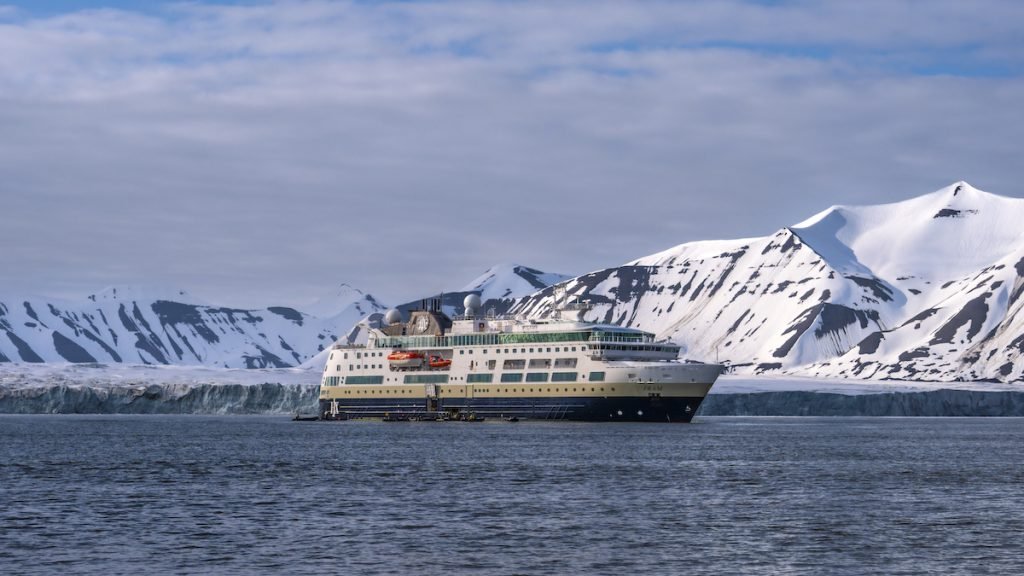
Current HX Expedition Fleet
| Ship | Approx. Guest Capacity | Ice Class | Primary Regions | Launch / Major Refit |
|---|---|---|---|---|
| MS Roald Amundsen | ~490 | Ice-class | Antarctica, Arctic, Alaska | 2019 |
| MS Fridtjof Nansen | ~490 | Ice-class | Antarctica, Arctic | 2020 |
| MS Fram | ~200 | Ice-class | Antarctica, Arctic | 2007 (refit 2022) |
| MS Spitsbergen | ~150 | Ice-class | Arctic, Norway, Greenland | 2009 (refit 2016) |
| MS Santa Cruz II | ~90 | Galápagos-compliant | Galápagos Islands | 2002 (refit 2016) |
Capacities and deployment vary by season.
Small-to-Mid Expedition Focus
Unlike ultra-luxury expedition brands that cap capacity below 200 guests, HX operates across two primary size categories:
Larger Hybrid Expedition Ships (~490 guests)
These vessels provide modern amenities including observation lounges, hot tubs, spacious suites for suite guests, a main restaurant, and onboard science centers equipped with advanced technology.
They are on the larger side for expedition cruising but remain IAATO-compliant for Antarctic landings.
Smaller Polar Expedition Ships (90–200 guests)
These vessels provide:
- Faster landing rotations
- More intimate onboard environment
- Higher guest-to-space ratio ashore
- Strong Arctic and Galápagos deployment flexibility
Hybrid Propulsion & Environmental Investment
The introduction of MS Roald Amundsen and MS Fridtjof Nansen marked one of the most visible technological shifts in expedition cruising.
These ships incorporate:
- Hybrid-electric propulsion systems
- Heat recovery technology
- Advanced hull design for efficiency
- Reduced emissions compared to conventional vessels
For you as a traveler, this means lower fuel consumption and quieter operation during certain sailing modes, particularly in sensitive environments.
Deployment Strategy
HX’s fleet deployment reflects a polar-first orientation.
Core operational regions include:
- Antarctic Peninsula and extended Southern Ocean itineraries
- Svalbard and Arctic Norway
- Greenland and Arctic Canada
- Alaska
- Galápagos Islands
The fleet is not structured for mass-market Caribbean cruising or entertainment-driven itineraries. It is engineered for expedition deployment windows aligned with seasonal wildlife and ice conditions.
Ship Size vs Experience Trade-Off
If you are comparing HX to other expedition brands, understanding ship size dynamics is essential.
- Larger ships offer more amenities and potentially lower per-guest pricing due to economies of scale.
- Smaller ships offer faster shore operations and a more intimate expedition rhythm.
- All HX ships remain within expedition-class operational frameworks rather than mainstream cruise categories.
The choice is less about “better” and more about alignment with your travel priorities.
Expedition Philosophy — What Defines the HX Experience

A ship can take you to Antarctica. An expedition philosophy determines what you actually experience once you arrive.
HX describes many voyages as mindful expeditions designed to balance exploration, science, and environmental responsibility.
If you are evaluating HX Expeditions, it is important to understand that the brand positions itself as expedition-first, not entertainment-first.
These mindful adventures emphasize observation, interpretation, and respectful interaction with fragile polar ecosystems.
Expedition Team-Led Programming
On an HX voyage, the expedition team is central — not peripheral.
Unlike mainstream cruise lines where shore excursions are outsourced add-ons, HX integrates its expedition staff directly into the daily structure of the voyage. You can expect:
- Dedicated Expedition Leader and Assistant Leaders
- Marine biologists, glaciologists, historians, ornithologists
- Zodiac drivers trained for polar operations
- Daily briefings and recaps
- Flexible itinerary adjustments based on weather and wildlife
Your daily schedule is not rigidly fixed months in advance. It adapts to:
- Ice conditions
- Wind and sea state
- Wildlife activity
- Landing site access
That flexibility is a defining characteristic of true expedition cruising.
Zodiac Landings & Shore Access
In regions such as Antarctica and the Arctic, ports do not exist in the conventional sense. Ships anchor offshore, and guests transfer to land using small expedition boats such as Zodiac craft designed for stability and maneuverability.
This means:
- You step into and out of boats with assistance
- You land on undeveloped terrain
- You walk on snow, rock, or tundra
- You return to a warm ship environment afterward
The experience is immersive and physically engaging — not observational from a balcony alone.
Science & Citizen Engagement

HX places strong emphasis on scientific literacy and environmental awareness. Many voyages include:
- Onboard Science Centers
- Citizen science projects
- Data collection participation
- Expert lectures tied to regional ecosystems
- Wildlife interpretation during landings
HX also hosts destination webinars and live Q&A sessions where expedition teams answer questions from subscribers and share insights about new itineraries and upcoming polar adventures.
These sessions are typically announced through official newsletters and handled according to the company’s privacy policy guidelines.
Onboard Atmosphere

The onboard environment tends to reflect:
- Nordic-influenced design
- Relaxed but structured expedition briefings
- Casual attire outside dining venues
- Smaller social group dynamics compared to large cruise ships
All-Inclusive — But Operationally Practical
HX markets itself as all-inclusive, and in practical terms that includes:
- Daily guided landings
- Standard beverages including wine, beer, and soft drinks
- Gratuities
- Wi-Fi (where connectivity allows)
- Expedition jackets and certain gear
- Professional voyage photography
However, the value of inclusion in expedition cruising is less about luxury perks and more about operational simplicity. In remote regions, logistical predictability matters.
If you are comparing expedition operators, inclusions should be evaluated not just for cost savings, but for expedition structure consistency.
A detailed breakdown of inclusions is outlined in the HX All-Inclusive Policy Explained guide.
HX Destinations & Operational Focus
HX’s operational focus is concentrated in regions where small-ship access, scientific programming, and environmental compliance are essential.
Antarctica
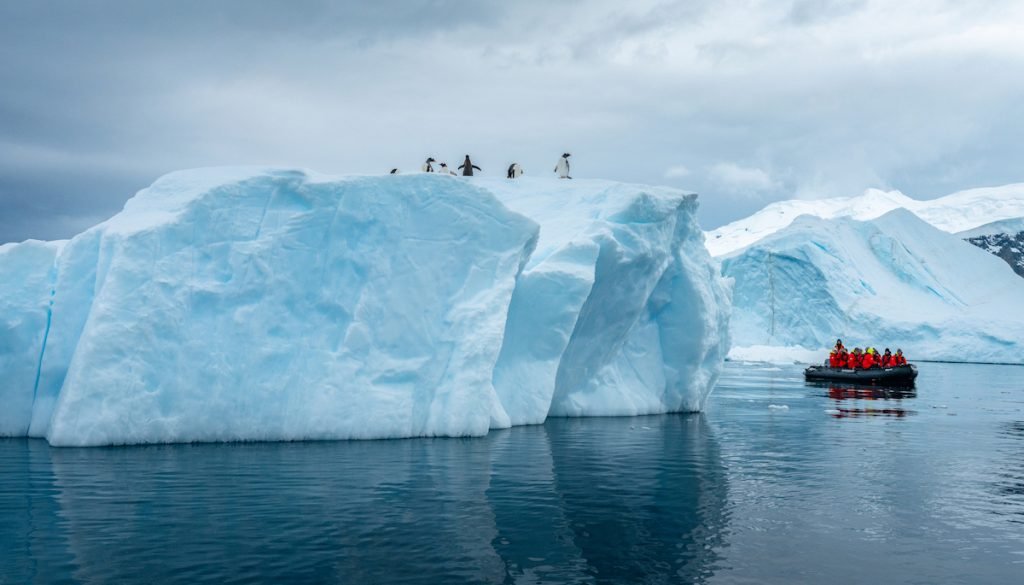
Antarctica remains one of HX’s flagship operational regions. The best times for Antarctic expeditions generally fall between November and March, when wildlife activity peaks and sea ice conditions allow frequent landings.
Expeditions often depart from Buenos Aires or Ushuaia in South America before crossing the Drake Passage toward the Antarctic continent, and include:
- Antarctic Peninsula voyages
- Extended South Georgia and Falkland Islands itineraries
These voyages operate under strict IAATO guidelines, including landing caps and wildlife protection rules. Ship size, ice class, and expedition team experience matter significantly here.
If you want a broader overview of expedition routes, ship types, and planning considerations, see the Antarctica Cruises Planning Guide.
Arctic & Svalbard
HX maintains strong Arctic deployment, particularly in:
- Svalbard archipelago
- Greenland’s fjord systems
- Arctic Canada
- Icelandic expedition routes
- Northern Norway winter sailings
- Polar bear habitat observation
- Glacial fjord navigation
- Indigenous cultural encounters
- Seasonal Northern Lights departures
Arctic itineraries may include encounters with polar bears, drifting ice floes, and the glacial majesty of the Lyngen Alps.
A deeper breakdown of regional strategy can be found in the Norway & Arctic Cruises Guide, which compares fjord cruising to high-Arctic expedition models.
Alaska
HX’s Alaska program focuses on expedition-style Alaska cruises that explore Alaska’s wilderness, including Prince of Wales Island, remote coastal communities, and areas shaped by the legacy of the Exxon Valdez oil spill. Partnerships with Alaska Native corporations and visits to newly developed indigenous-owned cruise ports help create deeper connections with local communities.
If you are planning a voyage in the region, the Alaska Cruise Planning Guide explains itinerary structures and seasonal considerations.
Galápagos

MS Santa Cruz II operates exclusively in the Galápagos Islands under strict environmental frameworks.
These voyages emphasize:
- Certified naturalist guides
- Island-specific landing rotations
- Wildlife interpretation
- Small-guest capacity compliance
The Galápagos program differs operationally from polar deployments but follows the same expedition philosophy.
Select Warm-Water & Transitional Voyages
Occasionally, HX deploys vessels to:
- Central America
- Atlantic island chains
- South American coastal regions
- Transoceanic repositioning voyages
Geographic Strategy in Context
HX does not compete in:
- Caribbean resort cruising
- Mediterranean mega-ship deployment
- Entertainment-driven seasonal circuits
Its geographic footprint is deliberately aligned with expedition-access environments — places where ship size, regulatory compliance, and landing logistics directly affect your experience.
Typical Pricing Range
HX voyages generally fall into these broad categories:
- Antarctic Peninsula expeditions (10–12 days): mid to high four figures per person, often extending into five figures depending on cabin category and season
- Extended Antarctica + South Georgia itineraries (18–23 days): typically higher five-figure pricing
- Arctic voyages (7–14 days): generally below extended Antarctic pricing but still within the premium expedition range
- Galápagos programs: positioned competitively within the regulated small-ship Galápagos segment
Pricing fluctuates based on:
- Cabin selection
- Sailing month
- Itinerary length
- Promotional cycles
- Ship size
A full breakdown of expedition pricing drivers appears in the Antarctica Cruises Cost guide.
Specific departure schedules and seasonal variations are usually outlined on each voyage’s itinerary page. Solo travelers should also check whether a solo supplement applies, as expedition ships typically have limited single-cabin availability.
Why Expedition Cruises Cost More
If you are comparing HX to mainstream cruise lines, the difference in pricing reflects structural realities.
Expedition voyages operate with:
- Lower passenger capacity
- Higher crew-to-guest ratios
- Specialized expedition teams
- Ice-class vessels
- Zodiac operations and landing logistics
- Strict environmental compliance
Unlike large cruise ships that spread operating costs across thousands of passengers, expedition ships operate on smaller scales in more remote regions. You are paying for:
- Access
- Operational capability
- Regulatory compliance
- Expedition staffing
- Environmental safeguards
Larger Ships vs Smaller Ships: Pricing Dynamics
HX’s fleet includes vessels carrying up to approximately 490 guests — larger than some boutique expedition brands.
This scale allows:
- Broader cabin category distribution
- Greater onboard facility range
- Potentially lower entry-level pricing compared to ultra-small expedition ships
However, smaller vessels within the HX fleet — such as those deployed in the Galápagos or select Arctic itineraries — often command pricing that reflects their more limited capacity.
What Is Included
HX positions itself as all-inclusive. Typically included in base fare:
- Daily guided shore landings
- Expedition team programming
- Standard beverages
- Gratuities
- Wi-Fi (connectivity dependent on region)
- Expedition jackets and certain gear
- Professional voyage photography
Optional activities that may involve an additional cost include:
- Kayaking programs
- Premium beverages
- Specialty dining upgrades
- Pre- and post-cruise land programs
Travelers should also account for potential extra costs such as premium excursions, purchases made using onboard credits or credit cards, or specialty activities not included in the base fare.
How HX Compares Within the Expedition Market
Within the broader expedition cruise landscape, HX occupies a defined middle ground between mainstream-adapted expedition offerings and ultra-luxury boutique operators.
It is positioned well above mass-market cruise pricing. The fleet is purpose-built for remote deployment, expedition teams are central to the onboard structure, and itineraries are designed around landing access rather than port density. In that sense, HX operates firmly within the premium expedition category.
At the same time, it is typically priced below ultra-luxury expedition brands that operate exclusively all-suite vessels with butler service, highly individualized dining programs, and elevated space-per-guest ratios. Those operators often emphasize luxury layering as much as destination access.
HX, by contrast, prioritizes expedition infrastructure — ice-class vessels, hybrid propulsion investment, scientific programming, and regulatory compliance in polar regions — over ultra-personalized luxury amenities.
If your primary priorities are expedition access, environmental design, and educational depth, HX often presents a balanced value proposition within its segment.
If your priorities lean more toward butler service, suite-only accommodations, or gastronomy positioned at the highest luxury tier, other expedition brands may align more closely with that expectation.
Ultimately, pricing alignment depends on what you are paying for. In expedition cruising, the cost is driven less by entertainment infrastructure and more by operational capability. HX sits in the premium exploration-focused tier — not entry-level, and not ultra-boutique luxury.
Who Should Book HX Expeditions — And Who Should Not
Expedition cruising is not a universal travel model. HX appeals strongly to certain traveler profiles — and less so to others. Understanding that alignment is more important than comparing amenities or cabin categories.
You May Be a Strong Fit for HX If:
HX tends to resonate with travelers who prioritize wildlife access and remote landings over traditional cruise ports. If stepping ashore in Antarctica, navigating Arctic pack ice, or exploring undeveloped fjords is your primary objective, the expedition structure aligns with that goal. The emphasis is on operational capability rather than entertainment infrastructure.
The brand also appeals to travelers who value educational depth. Expedition teams lead daily wildlife briefings, geological discussions, and environmental interpretation. If you want to understand what you are seeing — not simply photograph it — this framework enhances the experience.
Onboard life reflects expedition rhythm rather than resort energy. Evenings center around recaps, observation time, and informal discussion rather than nightlife programming. If your travel style leans toward intellectual engagement and environmental awareness, the atmosphere feels consistent.
Finally, HX suits travelers who prefer logistical simplicity in remote environments. Landings, expedition gear, gratuities, and core beverages are typically included, reducing transactional friction in places where infrastructure is limited.
HX May Not Be the Best Fit If:
HX is not designed as an entertainment-driven cruise experience. You will not find casinos, Broadway-style productions, large retail promenades, or resort-style attractions. If those amenities define your cruise expectations, mainstream operators may be more suitable.
It is also not positioned as an ultra-luxury, all-suite, butler-service expedition brand. While comfortable and premium in feel, the experience prioritizes expedition structure over personalized luxury layering.
Finally, expedition itineraries adapt to weather, ice conditions, wildlife activity, and safety assessments. If you prefer guaranteed port calls and fixed daily schedules months in advance, this operational flexibility may feel unpredictable.
The Core HX Traveler Profile
HX generally attracts curious travelers looking for an immersive learning experience in some of the world’s most remote destinations.
It is a brand built around exploration discipline. The right fit depends less on cabin size or dining style — and more on how you want to experience remote places.
HX Expeditions Pros & Cons
No expedition brand is universally aligned with every traveler. HX has clear structural strengths — and equally clear trade-offs. Evaluating both sides provides a more realistic framework than relying on promotional positioning alone.
Pros
The advantages of the brand relate to expedition structure, polar deployment experience, and fleet investment — not resort-style amenities. If your priority is access and interpretation, these factors matter significantly.
Deep Polar Heritage
HX’s operational roots in Arctic and Antarctic waters give it long-standing regional familiarity. Polar navigation, ice operations, and seasonal deployment are central to the brand’s identity rather than secondary offerings layered onto a broader cruise portfolio.
Purpose-Built Expedition Fleet
The fleet consists of ice-class vessels designed specifically for remote navigation and Zodiac operations. The introduction of hybrid-powered ships represented a meaningful capital investment in expedition infrastructure rather than aesthetic upgrades. For you, that translates into operational capability rather than retrofitted compromise.
Strong Expedition Team Structure
Expedition staff are integrated into the daily rhythm of the voyage. Marine biologists, geologists, historians, and naturalists lead briefings, landings, and onboard interpretation. If educational depth matters, this structure adds context beyond surface-level sightseeing.
All-Inclusive Simplicity
Landings, expedition programming, gratuities, standard beverages, and essential gear are generally included. In remote environments where add-on pricing can quickly accumulate with other operators, this simplifies budgeting and reduces transactional friction.
Some voyages also include onboard credit or exclusive offers for returning HX Explorers.
Science & Sustainability Integration
Citizen science initiatives, onboard science centers, and environmental partnerships form part of the operational model. Sustainability messaging is supported by structural investment, particularly through hybrid propulsion and regulatory compliance in polar regions.
HX’s onboard science centre enables real-time research participation for guests interested in environmental monitoring.
Cons
The brand is deliberately expedition-focused, and that design naturally excludes certain cruise features found in other segments of the industry.
Premium Pricing
Expedition cruising is structurally expensive, and HX sits firmly in the premium tier. While not positioned as ultra-luxury, pricing remains significantly higher than mainstream cruising. This is not a budget-oriented product.
Limited Entertainment Infrastructure
HX does not prioritize theatrical productions, nightlife venues, or resort-style amenities. Evenings are typically centered around expedition recaps and informal discussion rather than large-scale entertainment.
Larger Ship Scale on Select Vessels
Some vessels carry close to 500 guests — larger than boutique expedition brands operating under 200 passengers. While compliant with polar landing regulations, landing rotations and onboard dynamics differ from ultra-small expedition ships. For certain travelers, scale influences perception.
Weather-Dependent Itineraries
Expedition schedules adjust based on weather, ice conditions, and wildlife activity. This flexibility enhances access but reduces predictability. Travelers seeking fixed port guarantees may find the model less certain.
The Balanced View
HX delivers:
- Strong expedition structure
- Polar operational depth
- Modern hybrid fleet investment
- Education-driven programming
It does not attempt to replicate:
- Floating luxury resorts
- Ultra-high-touch personalized luxury
- Entertainment-centric cruising
The experience is purpose-built around exploration.
Is HX Expeditions Worth It?
The value of HX lies in how effectively it delivers access to those regions — and how well that delivery matches your expectations.
When HX Is Likely Worth It
HX tends to represent strong value if your priorities include:
- Antarctica or Arctic as a primary goal rather than a secondary add-on
- Structured Zodiac landings with experienced expedition leaders
- Hybrid-powered ships designed specifically for polar regions
- A science-centered onboard culture
- Clear all-inclusive pricing in remote environments
If your focus is wildlife density, glacial landscapes, polar light conditions, and interpretation from trained specialists, the experience-to-cost ratio often feels justified.
Particularly in Antarctica — where regulations limit the number of passengers ashore at any one time — operational discipline and fleet capability matter more than surface luxury.
If you are evaluating Antarctic itineraries more broadly, it may help to compare structure and ship size in the Antarctica Cruises Planning Guide, where route formats and landing dynamics are examined in detail.
When You May Want to Compare Alternatives
HX may not feel “worth it” if:
- Your priority is ultra-luxury personalization
- You are primarily motivated by suite space and fine dining over landing frequency
- You prefer fixed port schedules with predictable daily routines
- You are seeking a lower-cost introduction to cruising rather than expedition travel
If you are still deciding whether polar cruising aligns with your travel style at all, reviewing broader Arctic vs Antarctica comparisons can clarify expectations before selecting a specific operator.
The Real Question
Does HX match the way you want to experience remote places?
If you want:
- A structured expedition framework
- Education integrated into daily programming
- A fleet designed for high-latitude environments
- Operational credibility in polar regions
then HX is positioned coherently within that space.
If you want cruising as relaxation-first with exploration as a secondary layer, other segments of the cruise market may align more naturally.
Final Perspective
HX occupies a clearly defined position within the cruise industry. It is neither a mass-market operator built around entertainment infrastructure, nor an ultra-boutique luxury brand centered exclusively on suite space and personalized service. It also no longer operates as part of a transport-based coastal shipping model.
Instead, HX functions as a premium expedition operator with strong polar heritage and a fleet purpose-built for remote deployment. Its differentiation lies in operational capability, scientific integration, hybrid vessel investment, and structured expedition programming rather than theatrical amenities or ultra-luxury layering.
For travelers who prioritize landing access, environmental interpretation, and immersion in remote landscapes, this positioning can represent a coherent value proposition. The experience is designed around exploration discipline rather than spectacle.
The more useful decision framework is not whether HX is well-known or competitively priced in isolation. It is whether the expedition model itself — flexible routing, Zodiac landings, educational programming, and environmental focus — aligns with how you want to experience places like Antarctica, the Arctic, or the Galápagos.